

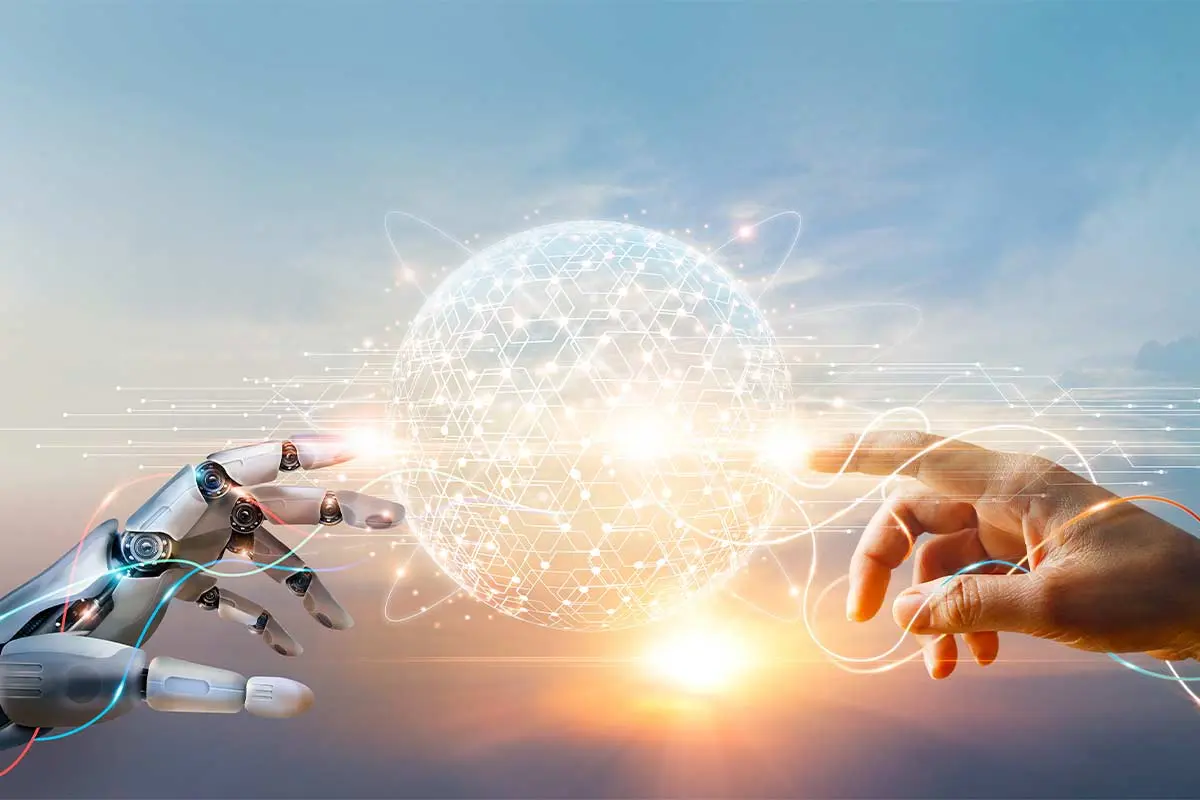


From its origin the tradeshow industry has introduced technological advancements that have not only revolutionized modern society but the industry itself. From pop up displays to LEDs, telephones and radio to smartphones, the industry has been at the forefront of advancement. But few, if any, technologies have created excitement and apprehension in the industry and the world at large more than artificial intelligence (AI). AI arouses anxiety over loss of jobs for people even as it stirs creative possibilities. Yet, not all AI is the same.
Agentic AI
As co-founder and CEO of Markus AI, Max Gabriel knows a thing or two about AI. “AI has been here for a while,” he observes. “It’s just that the whole generative AI wave is the loudest and the fastest growing at the moment.” But agentic AI is the tradeshow new hotness.
For Markus AI, agentic AI is an all-encompassing assistant, rather than a simple tool that eliminates a worker. “The way we built Markus,” Gabriel explains, “it is a group of agents, as we call them, and they’re your personal event crew of agents; because to do your planning, you need an agent, to summarize your notes, you need a different agent, to measure the event performance, you need a different agent. And what we have made is Markus for attendees, Markus for sponsors, Markus for organizers. What do they need to do pre-event, at the event, and post-event, all three stages of the workflow? We emphasize the pre-event as much as possible, because if you plan better, you’re going to get better results during the meeting and after.”
A week before an event Markus would contact users and ask what would make their visit successful, what are three things that they want to accomplish. “It’s literally constructed as an interview,” Gabriel says. “So that they can be very open-ended about what they’re thinking about, and we take that to create a personalized plan.”
Planning the visit is just the start. When the user meets fellow attendees, exhibitors, and sponsors at the event, it can be recorded and the AI takes notes and summarizes those meetings, which gets folded into the plan. This continues across the two or three days of the visit. But the end of the event isn’t where Markus stops.
“When they leave the event, all the meetings they’ve had are organized in one place,” Gabriel says. “The users then get the actions, the follow-ups they need to do. All that they need to do, all of that, is taken care of by Markus.”
Gabriel says this method of follow-up gets the biggest reaction from users. Many people find the trip home from an event to be the worst part. “The flight right back, you’re dreading about the number of actions you need to follow up; the notes you took, the cards you collected, everything,” he says. “With Markus, all that is organized as if you have your own EA walking around, taking notes, sorting it out.”
The typically exhausting event post-mortem is left to Markus, so the user can relax and build enthusiasm upon seeing the success, the results, and the actions to be taken when they return home. Gabriel’s tagline: “We want the flight right out to be as exciting as flight right in.”
Other companies are taking a similar approach from different angles. “Tradeshow business is 10,000 little things,” says Shawn Pierce, president, Strategic Events, Meetings & Incentives at MCI USA. “None of them are individually hard, but each one has to be done at the right time, in the right order to get the crescendo that is a beautiful event.” AI can help with that.
But first, as Pierce says, MCI turned inward and asked how they would use AI themselves. “If we could automate tasks on our own side for our customers for ourselves, what would we do? Clearly, customer service. Every email and message we get could be from 10, 20, 50,000 attendees. That was the first thing we looked at: How can we make our customer service much more effective? 24 hours a day, seven days a week, in any language. That’s AI for us. That was a good, easy, understandable win to start with. And the results speak for themselves, MCI USA now handles over 66 percent of every attendee interaction through AI.”
But Pierce hasn’t forgotten the heart and soul of the tradeshow industry. “We don’t want to lose the human side,” he stresses. “We are in the face-to-face business. I believe you, and you believe me, because I look you in the eye. I want to buy your product, believe in your service, your message. A lot of things can be done using AI. The only thing it will never replace is human connection, and the events industry provides the best platform for that connection.”
Show Planning
From pre-planning the show to registration, assembling data, analyzing that data, realizing day to day questions and answers just leading up to the event. That’s the AI approach for MCI. “Users have an agent that reads their email,” Pierce says, “That reads their team’s messages, their project planning schedule—anything that comes into their inbox about that event, It gives the user a summary at the start of the day, every day. Like a 24 hour, seven-days-a-week assistant, AI can take care of the multitude of small tasks so users can focus on the larger ones.
“You want people spending their time being less tactical and more strategic.” But even with that assertion, Pierce still calls for the human element: “Someone still needs to have that oversight to make sure everything is safe and humanized.”
Data
The conversation comes down more and more to data. Don Kline, CEO of Map Your Show, says it outright: “What we see in the use of AI is what it can do on the data side.”
“We’re focused on activating the show organizers’ data to help the exhibitor, and the attendee to have a better experience.” With AI, Map Your Show asks what are attendees and exhibitors looking for, and gets them together with more efficiency and depth.
“We look at the exhibitor data and what they’re interested in selling,” Kline says. “We look at the behavior of the attendees, what interests them in the event. It’s looking at the intent of both, exhibitors and attendees, and then help match those individuals in those companies, so that the attendee has the best possible experience at the end of the show. Which makes for happier exhibitors. Which makes for happier shows.”
In a way, Kline is actually demonstrating how AI humanizes the tradeshow experience in a very individual way. “You leverage this data to deliver a more personalized, a hyper personalized experience, for that attendee.” Yet, Kline is not just talking about improving the individual experience. Map Your Show’s AI goal is to help the tradeshow industry as a whole. “We can actually transform the industry and the industry experience with the data that we know, the data that we know about the exhibitor, the data that we know about the attendee’s behavior. We can create a better overall experience.”
Wendi Jacobs, marketing + account development manager for Acer Exhibits & Events, is cautiously optimistic. “On the horizon, I think we will see an increase in AI use but we need to tread carefully. The industry’s backbone is understanding our clients’ brands and conveying those through the authenticity of face-to-face marketing connections. An over-reliance on AI could cheapen the value of the bespoke design and custom solutions that we produce.”
Where Acer Exhibits is concerned, AI fulfills many back of house functions: analytics, ROI calculations, data management. There it is again—data. “Presentation prep, researching clients, and planning are prime areas for AI use to streamline our operations and save us time,” Jacobs says.
Design
But there is room on the design side. Ideation, mood board development, AI can offer creative kickstarts. “When a client gives us keywords of ‘modern, colorful and techy’ what does AI think that looks like?” Jacobs says. “It’s a check-in point for the designer and account executive to be sure we’re getting the client aesthetic right and to generate some design cues.”
She doesn’t see using AI to create full designs any time soon though. Once again, the human element counts. “Our design team and their understanding of client brand nuances, tradeshow rules, and spatial and functional considerations are too valuable to our process and product.”
The Future
AI agents, the digital executive assistants. Helping plan, register, and execute, helping assess, analyze, and evaluate. AI will allow people to throw themselves into a tradeshow with clarity, focus, and anticipation. The anxiety that generative AI stirs overshadows agentic AI’s sheer power and versatility that’s at the beck and call of people everywhere.
But industry insiders are confident that AI is a tool that can enhance the human experience, rather than diminish it. As Jacobs says, “I think AI will enhance how exhibitors are able to understand and respond to their audiences, allowing them (somewhat ironically) to provide even more relevant in-person experiences.”
Gabriel agrees, “I hope it gives us all time to be more human together.”