



When the Unexpected Happens
It’s a dangerous world out there. That would ring true at almost any point in history — but it feels especially relevant in March 2026. Natural disaster risks are driving up insurance costs. Criminals are targeting popular resort destinations. Armed conflict has shuttered major global travel hubs. And the events industry, by its very nature, puts groups of people together in places that can be every bit as vulnerable as they are beautiful.
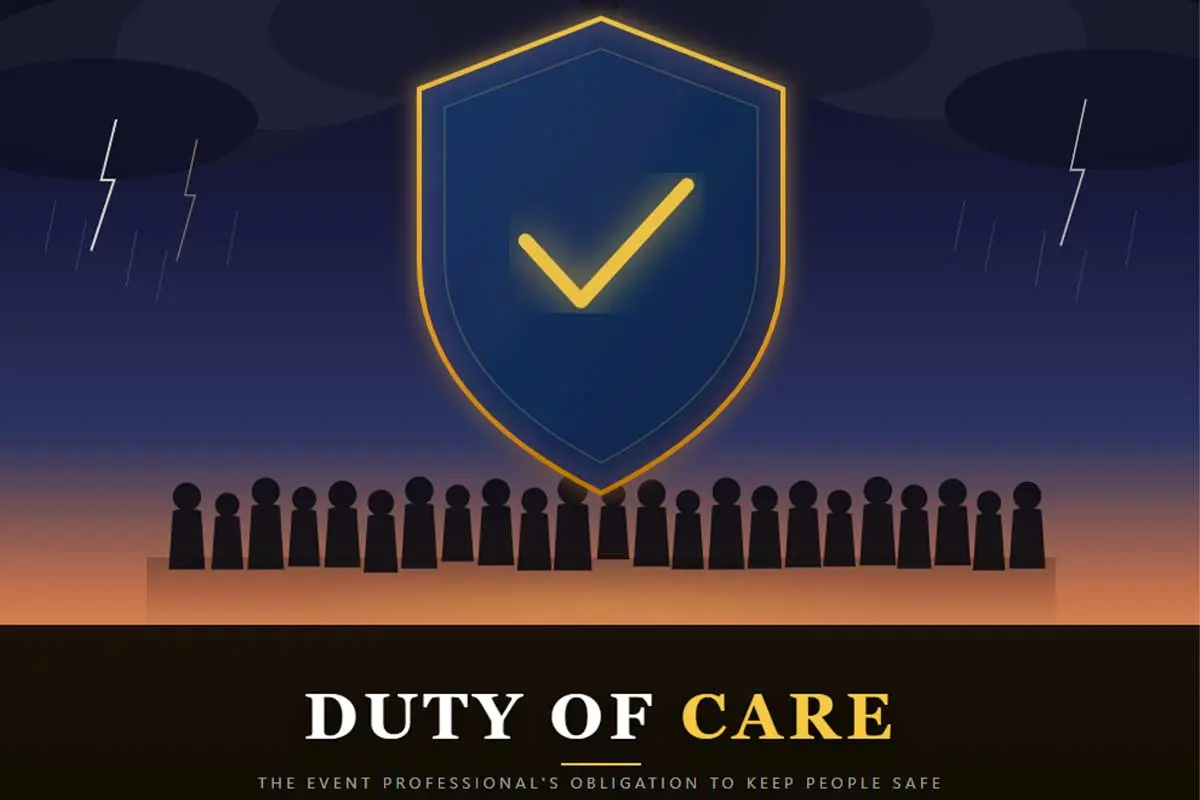
For event planners, field coordinators, and operations managers, this reality isn’t an abstraction. It’s a professional and legal obligation. It’s called duty of care — and how well you’ve prepared for it may be the most important work you never hope to.
What Duty of Care Actually Means
Duty of care is a meeting planner’s legal and ethical obligation to take all reasonable precautions to ensure the safety and well-being of attendees, speakers, and staff. It is not a checklist item to be filed away. It is a living commitment that begins the moment someone enters your event space and continues until every person has left safely.
Its scope extends across virtually every dimension of event planning — venue selection, transportation, food and beverage safety, health and medical support, security, emergency evacuation procedures, and clear communication strategies for when things go wrong.
For outdoor events and festivals, the stakes are particularly high. A panel at FestForums, the business conference for festival production and operations, recounted incidents of loss of life at events that lacked show-stop protocols — no plans to monitor conditions, trigger shutdowns, and move people to safety when thresholds were crossed. That’s not a planning failure. That’s a duty-of-care fail.
The Key Pillars of Event Safety Planning
Physical Safety requires that every venue meet baseline standards — unobstructed emergency exits, adequate lighting, secure staging, and proactive hazard mitigation before the first attendee arrives.
Security and Crowd Management means deploying adequate staffing and control measures to protect attendees from external threats and internal incidents like overcrowding. Emergency response procedures must be documented, rehearsed, and accessible to the entire operations team.
Communication and Training is the connective tissue of a strong safety plan. Staff, contractors, and attendees all need clear information about risks and procedures before an incident — not during one. This includes designated people who can make decisions under pressure.
Natural Disaster Preparedness, underscored by events like the recent Los Angeles-area wildfires, demands identified alternative venues, real-time monitoring of local environmental conditions, and flexible cancellation and postponement policies. Hope is not a strategy.
Legal Compliance requires staying current with local safety regulations, which vary significantly by geography and venue type. Outdoor events carry weather-related considerations. International retreats may introduce an entirely different legal framework.
The Industry Is Learning — Sometimes the Hard Way
Shortly after FestForums, the there.app team was in conversation with a major travel agency that had just managed the evacuation of guests from a setting facing active threats. The operational weight of coordinating dozens of people across unfamiliar terrain, under stress, without a clear central hub of information, is something no team should face unprepared.
Field coordinators need to know who to call. Operations staff need to know where to send people. Everyone on the ground needs a single, reliable source of truth — updated in real time, available on the device already in their pocket. That need exists in every live event environment. It just becomes existential during a crisis.
How there.app Addresses Duty of Care — By Design
there.app was built to serve the full lifecycle of live group experiences: engagement, coordination, and execution across all the moments that make live activities worth attending. But its mobile-first, highly configurable architecture makes it equally capable of adapting to what’s needed when things get less enjoyable.
The platform consolidates the fragmented tools that field teams typically juggle — messaging apps, task platforms, spreadsheets, navigation tools — into a single intuitive environment. In ordinary operations, your team is informed, in touch, and on top of execution. In an emergency, the same infrastructure that coordinates the morning keynote can coordinate an evacuation.
To illustrate this, there.app developed a hypothetical scenario: a Caribbean corporate retreat during hurricane season. Here’s how the platform responds:
Pre-built, concealed emergency pages. Using the BOARD module, organizers can build emergency scenario pages well in advance — kept hidden by default so participants aren’t distracted by crisis protocols during normal operations.
Instant activation when conditions change. If conditions deteriorate, those pages open to the full team immediately and can be elevated through starring, pinning, and direct messaging. The shift from routine to emergency happens in moments.
Rich, structured emergency content. Activated pages can include formatted instructions with visuals, point-people accessible via multiple channels including there.app CHAT, key locations integrated with live navigation, contingency evacuation schedules, relevant files and videos, and real-time checklists of critical tasks.
Real-time location sharing. there.app’s distinctive location SHARE features let coordinators confirm that team members and attendees are safely situated — and identify anyone who may need help.
Reassurance Is Part of the Job
Corporate clients want to know that the team managing their executive retreat has a plan for things that aren’t in the run-of-show. Attendees are more safety-conscious than ever. And event professionals who can point to a living, mobile-accessible platform — one that manages logistics on a good day and safety on a bad one — are demonstrating preparedness that increasingly matters as a competitive differentiator.
there.app is that platform. It’s there for the moments that make live experiences memorable. And it’s there for the moments that require something more urgent: the ability to reach every person on the ground, communicate clearly, and keep everyone safe.
In a world that has grown more unpredictable, that capability isn’t nice-to-have. It’s a professional obligation — and now, there.app is a solution for duty of care.
Want to see there.app’s duty-of-care capabilities in action? Contact us:
Seth Kenvin-President, seth@there.app ,
Chris Kappes-Strategic Advisor, chris.kappes@there.app