


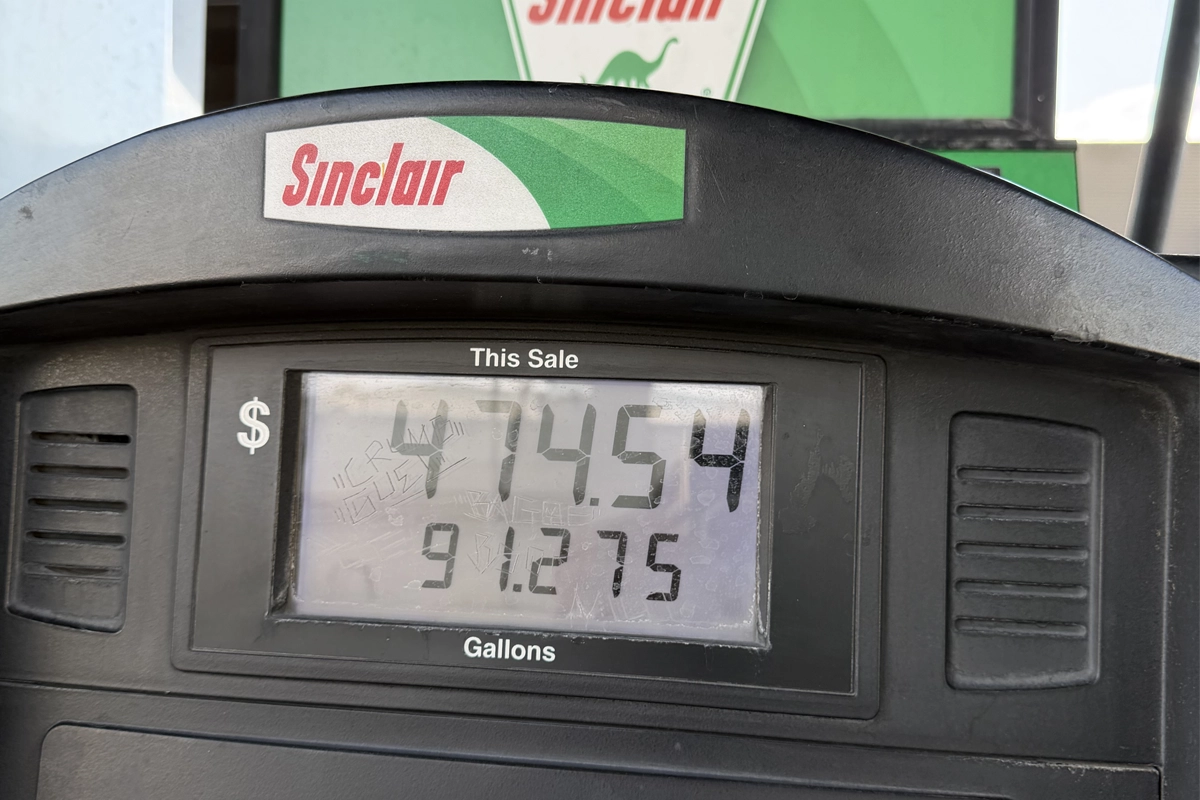


Fuel prices have receded from their spring 2026 peak, slightly easing the pain for Joe Martillaro, managing director of Superior Logistics in Chicago, but it’s still a complex puzzle to keep shipping rates reasonable for his tradeshow customers.
The spike in diesel prices, primarily attributed to the Middle East conflict, is crushing the tradeshow shipping industry. It puts pressure on every link in the supply chain, creates delays in scheduling and drives fuel surcharges higher.
The national average for diesel stood at $5.29 a gallon at the end of July, compared with $3.73 a year ago, according to AAA. The highest prices were reported in Hawaii ($6.94) and California ($6.87), while the lowest were in Texas ($4.92) and Nebraska ($4.93).
“The reality is that this diesel crisis is the icing on the cake to a storm that’s been brewing and building for a long time,” Martillaro tells Exhibit City News. “The current administration’s commitment to tightening driver’s standards, combined with increased demand and increased diesel prices, has seen the market flip in a 60-day period.”
Shipping rates are more volatile than ever from a spot perspective, topping the COVID peak, he informs. Truckload rates reached $3.83 a mile in June, and they don’t appear to be an anomaly. Martillaro calls it a “reset of the landscape.”
Specifically, from the West Coast heading east, rates out of California are at a level he’s never seen.
“It had to happen as the cost of doing business and owning trucks and paying insurance premiums was literally driving carriers out of business,” the transportation manager asserts, adding that the war in Iran and stricter driver regulations “simply supercharged the situation.”
Today’s Reality
The conflict has caused major disruptions in global oil supply due to restrictions on the Strait of Hormuz, a route that carries roughly 20 percent of the world’s crude oil. Fluctuating fuel prices expose trucking companies to reduced profits, increased risk in taking on loads, and difficulty in long-term planning.
“We take it day by day,” says Matthew Gonzales, national account executive for Elkridge, Maryland-based ICAT Logistics. “Of course, we’ve been more creative with our clients, letting them know prices are subject to change. We hold quotes close to 10 to 14 days, whereas in the past, it was 30 days. Most of our customers (purchase) gas themselves, so they get it.”
The reality is that high fuel prices are here to stay. It wasn’t long ago, around the turn of the century, that gasoline prices were hovering around $1 to $2 a gallon. Those days are history.
“Prices for everything in the universe have spiked and our industry in general was simply behind,” Superior’s Martillaro concedes. “We had been seeing this coming down the line for a while, as trucking always flips from one end to the other, and now the time for rates to swing upward is upon us. The difference with this swing is that it’s far more dramatic and appears to be far more sustained.”
Evaluating Options
Jose Benitez, managing director of Exhibitway Logistics in Chicago, formerly Pro Trade Logistics, prefaces his interview with ECN that fuel prices have always directly affected carrier operating costs in the transportation industry.
“It changes the cost for both us and the exhibitors,” says Benitez, who renamed his business to reflect its emphasis on shipping for tradeshow exhibitors. Shipping rates increased “drastically” in three to four months leading into August, and there’s no way to “erase those prices,” he adds.
However, by leveraging a nationwide network of carefully vetted carriers and planning shipments as early as possible, Benitez minimizes the impact of rising fuel costs, maintaining competitive pricing.
At Exhibitway, we don’t simply book freight. We evaluate multiple carrier options, routing strategies and transit schedules before every shipment,” he explains.
He may consolidate several exhibitors going to the same tradeshow, or taking the same route to another show, thereby utilizing one truck instead of three, saving not only on shipping costs, but reducing carbon emissions. He finds strategic warehouse locations, ships early to avoid premium pricing, and selects the mode of transportation that best balances cost and service.
“At the end of the day, the biggest savings usually come from planning, not cutting corners,” Benitez has learned.
No ‘Magic Elixir’
Diesel prices are at least a dollar higher than they were in 2025, and there’s no “magic elixir” to make it easy to swallow, Martillaro attests. Tradeshow exhibitors have to understand that capacity and cost are a real concern for budgets. It’s part of the “new norm,” and Martillaro predicts shipping rates will ineluctably escalate.
“Tradeshow loads are already something that a majority of drivers don’t want to handle because of excessive wait times and specific detailed steps required. This is exasperating when the general commodity market is paying so well,” he points out. “Why would a driver choose to handle a show load when he or she can take a dock-to-dock general commodity load for more money?”
Long wait times at convention centers, receiving warehouses, hotels and event sites are crippling the industry’s ability to provide quality solutions for clients. General contractors, it seems to Martillaro, are trying to do more with less and can’t handle the level of volume at the show site.
Gonzales of ICAT Logistics experiences the same problem with forced waits at the completion of a tradeshow.
“Our job as tradeshow carriers is to never let that happen,” he says. “We offset that with onsite representation, working with the general contractor, working with Freeman, working with GES to get things moved up. It’s a challenge, no doubt about it, but it’s the industry.”
Congestion in the marshalling yard is another ongoing challenge at many convention centers, Exhibitway’s Benitez adds. Drivers can spend several hours waiting for their assigned unloading time, reducing productivity and consuming valuable hours of service. If tradeshow freight misses its scheduled delivery or pickup window, exhibitors face additional handling, storage and re-delivery charges.
“That’s why communication between exhibitors, carriers, decorators, convention centers and logistics providers has become more important than ever,” Benitez stresses. “Tradeshow logistics isn’t simply about moving freight from Point A to Point B. It’s coordinating dozens of moving parts, so everything arrives exactly when and where it’s needed.”
Most Superior Logistics clients have little experience with marshalling yards and staging areas, Martillaro notes. They feel frustrated standing in line to check in at 6 a.m. and then waiting 10 to 12 hours to be called into another line at the convention center. Staffing appears to be a major issue at many tradeshow sites across the country.
“Choosing a carrier who understands these realities is the key between your freight being picked up or forced off the show floor,” he says.
Disruptions Persist
Global supply of crude oil continues to be restricted at the time of Exhibit City News magazine’s Q4 publication. One day, the United States is launching air strikes against Iran; the next day, they’re negotiating a ceasefire. The Strait of Hormuz remains under siege, and Ukrainian forces are knocking out Russian oil refineries, further decreasing capacity and driving up prices.
Superior Logistics will monitor transportation costs closely and keep its customers informed, Martillaro assures. Meanwhile, he advises tradeshows and event organizers to prepare their clients for budgets that will change dynamically from a cost perspective as shipping rates settle into the new economy.
Disruption in global oil supply is inevitable. It’s not the first time, probably won’t be the last. Industry analysts expect instability to persist another year or two amid geopolitical tension, tariff changes and shifting trade policies. Preparation is key for shippers.
“For me, the biggest thing is the communication factor, letting them (clients) know the quotes are good for two weeks,” ICAT’s Gonzales reiterates. “We’ve done some creative things. If fuel is a big hiccup for them, we may give them two free hours of waiting or detention time to offset the cost.”
Benitez has faith in the resilience of the shipping industry. Improved technology allows exhibitors to track freight in real time and respond more quickly when unexpected situations arise. He believes sustainability will also play a larger role over time. While electric vehicles can move freight over short distances, widespread adoption of EVs for long-haul shipping will depend on advancements in infrastructure, range and charging capabilities.
“Regardless of how transportation evolves, one thing won’t change,” Benitez assures. “Exhibitors need confidence that their exhibit will arrive on time and ready for the show.”
This story originally appeared in the Q4 2025 issue of Exhibit City News, p. 82. For original layout, see Print Version
Related stories
Javits Sustainability Strategy Expands Beyond the Green Roof