



Destination leaders from Orlando, Las Vegas, Washington, Detroit, and Los Angeles showcase record tourism, rising costs, and new convention center expansions at Mandalay Bay.
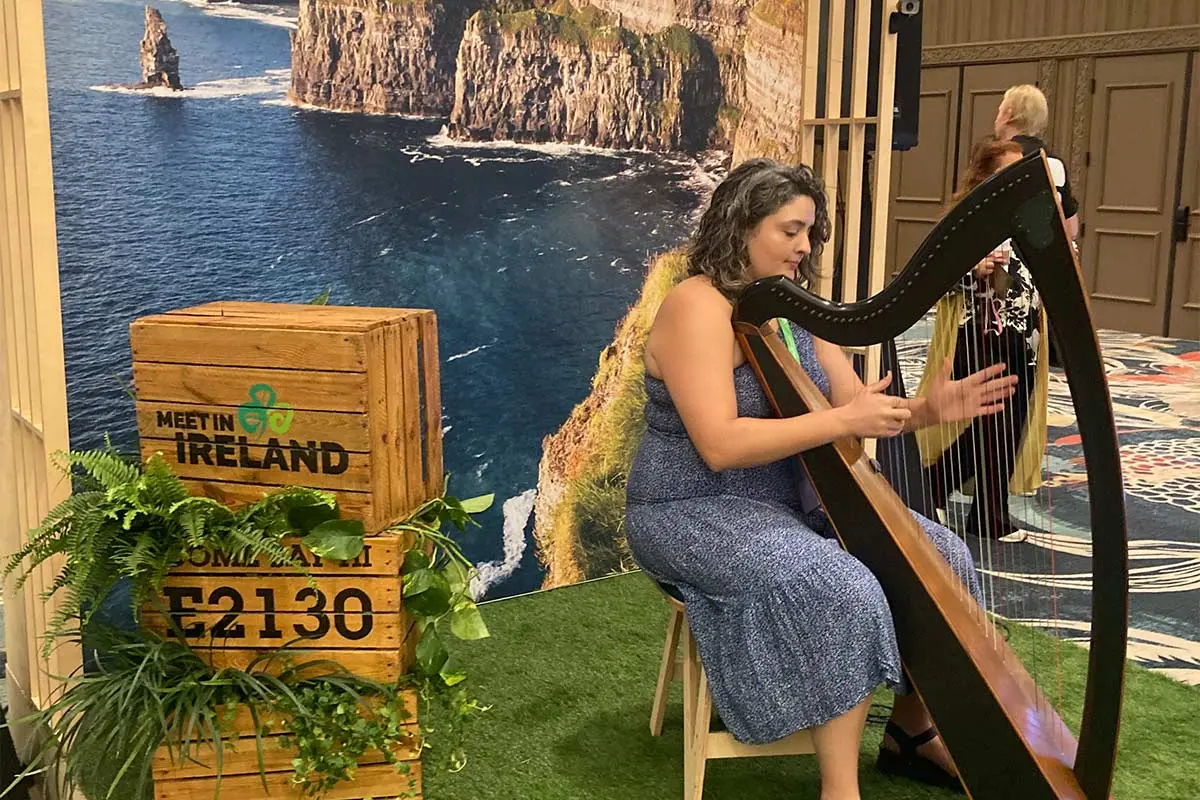
The scope of competition for the almighty travel dollar was on lavish display across the expansive show floor at IMEX America, a premier global meeting and events exposition held Oct. 7-9 at Mandalay Bay Convention Center in Las Vegas.
Destination management organizations from 150 countries touted their attractions like carnival hawkers. There was no audience shortage, as an estimated 29,000 attendees packed the aisles.
Greeting them at the show’s main entrance was the exhibit booth for Orlando, consistently ranked with Las Vegas as the No. 1 or No. 2 convention city in the United States, depending on criteria.
Orlando posted record-breaking numbers in 2024, including 75 million visitors and 5.6 million business travelers. Orange County Convention Center was “dark” just four days during the year, with no tradeshows moving in or out, says Lisa Messina, chief sales officer for Visit Orlando and formerly with Las Vegas Convention and Visitors Authority.
Orlando is expanding its convention center’s grand concourse in 2026, adding 44,000 square feet of meeting space and a 100,000-square-foot ballroom, bringing total leasable space to 2.2 million square feet. A 200,000-square-foot multipurpose event center is in design phase.
“Demand is not our issue,” Messina relates. “Availability is.”
A 30-minute presentation for hosted buyers highlighted new attractions such as Universal Epic Universe, the first major theme park to open in Orlando in 25 years. Disney World’s Magic Kingdom Park debuted its first nighttime parade since 2016. Sea World is launching a submersible ride that takes guests on a voyage into the ocean’s deep wonders.
RISING COSTS
Like Las Vegas, Orlando is experiencing rising costs for airline flights, hotel rooms, exhibit space, event catering, dining and other expenses associated with the tradeshow industry. It’s a challenge facing convention cities across the United States.
The average hotel rate in Orlando is $401 a night, compared with $271 in Las Vegas, according to MentalFloss.com. Boston tops out at $460, and San Diego is the lowest among major convention cities at $242.
“Basically, pricing is a function of supply and demand,” Messina notes. “There are times when we command higher rates. But Orlando sales reps … they’ll work with you to find deals and venues to match your budget.”
In the nation’s capital, which draws heavily upon international visitors, visa fees and wait times have become an issue for travelers, along with a reduction in nonstop flights, says Melissa Riley, senior vice president of Destination DC.
She believes negative headlines have exaggerated people’s perceptions of Washington. While federal attractions are closed due to the government shutdown, the city’s world-class museums and restaurants remain open, many within walking distance of the convention center.
With three airports serving the region, travelers are able to do more comparison pricing, plus the Amtrak train runs up and down the East Coast. Hotel rates average just under $300 a night.
“At the end of the day, we’re not going to be the least expensive destination,” Riley confesses, “but understanding the total package, from your arrival at the airport, there’s hundreds of free things to do. The Smithsonians are free. It’s also understanding that you’re going to drive a little more value because we have so much intellectual capital.”
ECONOMIC CYCLES
The travel and tourism industry reflects the economy in general with its ups and downs, explains Claude Molinari, president and chief executive officer of Detroit Metro Convention and Visitors Bureau.
Las Vegas felt an immediate backlash from the Trump administration threatening Canada with 50 percent tariffs and off-the-cuff talk about making it the 51st state. Canadian visitors dropped 10 percent. It was worse for Detroit, which saw a 30 percent drop in Canadian visitors.
“The fact is there’s going to be a rise and fall, and I’m extremely optimistic about the future,” Molinari expresses, pointing out the huge IMEX crowd as reassurance. “People are very excited about experiential travel.”
Detroit is definitely a “value destination,” he asserts. Hotel rates, dining and entertainment are cheaper than most big cities, plus Detroit has “that swag, that spirit and uniqueness you don’t see anywhere else.” The city boasts four major sports teams downtown and every genre of music.
By contrast, Las Vegas is losing its luster as the Entertainment Capital of the World. Fewer visitors are hitting the Strip, and social media is flooded with disparaging comments about price-gouging.
Convention business is carrying the town. It’s home to some of the world’s largest tradeshows: CES, SEMA, NAB, MAGIC, World of Concrete, SHOT Show and ConExpo-Con/Agg top the list.
“Part of the challenge is Las Vegas is at the top of the market,” Molinari suggests. “When you’re on top, everybody takes shots at you. I would aspire for Detroit to take shots like Las Vegas.”
VITAL EXPANSION
Orlando and Las Vegas are among several U.S. cities expanding or renovating their convention centers. Los Angeles Convention Center broke ground Oct. 1 on a “watershed” expansion project, describes Adam Burke, president and CEO of Los Angeles Tourism Department.
“It’s safe to say this is a transformative investment for years to come,” Burke comments at an IMEX press conference. “This is really forward-looking to meet the needs of today’s meeting planners.”
Los Angeles welcomed more than 50 million visitors in 2024, generating a $45 billion economic impact. More than 9,600 hotel rooms have been added to the city’s inventory since 2020.
In terms of value, how does Los Angeles stack up against top-tier convention cities exhibiting at IMEX?
“It’s not Los Angeles specifically,” Burke answers. “Planners everywhere are closely watching costs. Look across the industry. Marginal costs are getting more expensive. That’s why 9,600 rooms are important. They’re limited service all the way up to luxury and everything in between. We can find the right solution for every budget.”
Aside from the convention center expansion, Burke mentioned airport renovations at LAX, a people-mover to access downtown, mostly sunny weather throughout the year, and “intellectual capital” from JPL, Silicon Beach and university academia.
“I think ultimately it is diversity,” Burke says about Los Angeles, where people from 160 countries speak 200 languages. “Los Angeles doesn’t just welcome them but reflects that (diversity) in every attendee.”