

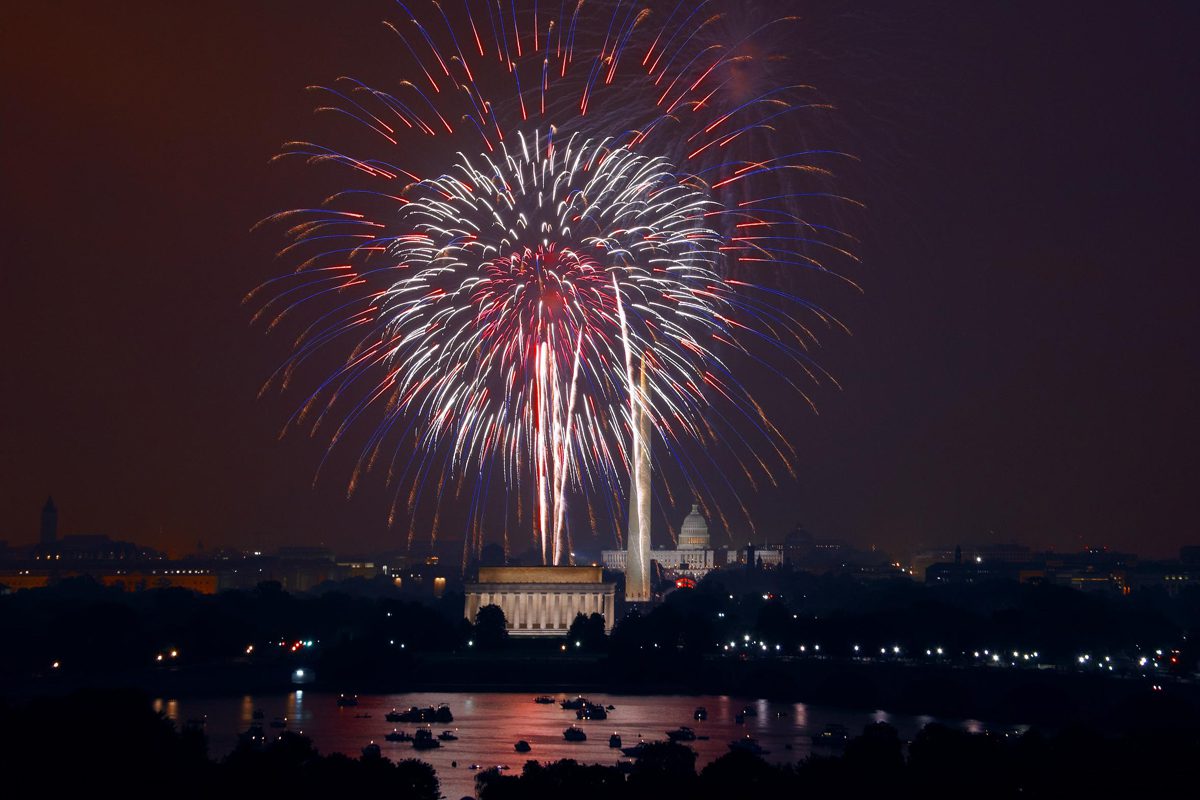


On July 4, America does not just celebrate. It builds.
For one day each year, parks become concert venues, streets become parade routes, harbors become stages, stadiums become symbols, and city skylines become screens. The work is temporary, but the memory is meant to last. Long before “experiential” became an industry term, the Fourth of July gave the country a recurring stage for sound, light, pageantry, commerce, grief, pride, and spectacle.
That stage is about to get bigger. On July 4, 2026, the United States will mark 250 years since the adoption of the Declaration of Independence. Although the Continental Congress voted for independence on July 2, the Declaration was adopted on July 4, and the signing process began later, on August 2.
The distinction matters. However, so does the date. July 4 became the country’s public shorthand for independence. Over time, it also became one of America’s most reliable tests of temporary infrastructure. The holiday asks cities to move crowds, close streets, secure public spaces, power stages, manage vendors, coordinate broadcasts, and tear down quickly.
For the tradeshow and live-event industries, that sounds familiar.

The First Show
The template began early.
On July 4, 1777, Philadelphia marked the first anniversary of independence with cannon fire, bells, illumination, and fireworks. That first public celebration created a structure that still feels recognizable today.
There was a civic message. There was a crowd. There was sound. Finally, there was a visual finish.
The tools have changed, but the basic show flow has not. From that first anniversary forward, the Fourth of July became a public event as much as a patriotic observance.
The Fourth Becomes a Civic Stage
By 1801, the White House had joined the show.
Thomas Jefferson hosted the first Fourth of July celebration at the President’s House, opening the building to diplomats, officers, citizens, and Cherokee chiefs. The Marine Band played, and the north grounds hosted horse races, parades, food, and drink.
In other words, the holiday had already moved beyond ceremony. It was part reception, part festival, and part open house. More importantly, it showed how the Fourth could turn a political setting into a public event environment.
Soon after, the date became useful for launching national projects. On July 4, 1848, the cornerstone of the Washington Monument was laid before more than 20,000 people, including President James K. Polk, Dolley Madison, Eliza Hamilton, and future presidents.
That ceremony was not just construction. It was event design before the phrase existed. A monument needed a public beginning, and the Fourth gave it one.
America on Display

For the tradeshow world, the strongest historical bridge came in 1876.
When the nation reached its centennial, Philadelphia hosted the Centennial Exhibition, officially the International Exhibition of Arts, Manufactures, and Products of the Soil and Mine. The exposition showcased industrial achievement, technology, design, and national ambition. It also drew close to 10 million visitors to more than 285 acres in Fairmount Park.
That was not a fireworks show. Instead, it was a city-scale experience built around display, movement, education, salesmanship, and national storytelling.
In modern terms, the Centennial Exhibition did what tradeshows, expos, brand activations, and public festivals still do. It gathered people around what a country, company, or industry wanted to show next.
Still, the Fourth has never carried only celebration. On July 4, 1863, Vicksburg surrendered to Union forces after a long siege. That moment complicates the holiday, and it should.
Public events do not erase conflict. Often, they reveal it. The same date that carries fireworks and parades also carries memory, mourning, protest, and unresolved questions about who gets included in the national story.
A Stadium Holds the Moment
In 1939, July 4 became one of the most powerful stadium moments in American history.
Lou Gehrig gave his farewell speech at Yankee Stadium in front of 61,808 fans. The moment remains one of the clearest examples of how a live venue can hold public emotion at scale.
No fireworks were needed. Instead, the production value was the setting, the microphone, the crowd, and the silence around a beloved athlete facing illness.
That moment still matters because it shows what live events can do at their best. They are not powerful only because they are loud. They are powerful because people are present together.
The Bicentennial Build

In 1976, the Bicentennial turned the Fourth into a national logistics exercise.
Operation Sail brought more than 200 ships to New York Harbor on July 4, with more than six million spectators. The event became a defining image of the Bicentennial and a massive public gathering in one of the busiest harbors in the world.
For attendees, the day was about tall ships and celebration. Behind that image, however, was a temporary operating system built across water, streets, viewing areas, broadcast locations, and security zones.
The event still feels like a useful preview for 2026. It required maritime coordination, public viewing plans, media coverage, crowd management, transportation, security, and citywide operations. It was patriotic theater, but it was also show management.
The Modern Fourth
The modern Fourth has continued to stretch beyond parades and fireworks.
On July 4, 1994, the United States men’s national soccer team played Brazil in the Fédération Internationale de Football Association (FIFA) World Cup Round of 16. Approximately 11 million Americans watched the match, then an all-time high for soccer in the United States.
Three years later, the National Aeronautics and Space Administration (NASA) gave the country a different kind of Independence Day spectacle. Mars Pathfinder landed on Mars on July 4, 1997, carrying Sojourner, the first robotic rover delivered to the Martian surface.

By 2023, Las Vegas had added a new visual chapter. Sphere’s Exosphere fully illuminated for the first time on July 4, introducing a 580,000-square-foot programmable light-emitting diode (LED) exterior to the Las Vegas skyline.
That moment belongs in an Exhibit City News (ECN) story because it shows where spectacle has moved. Fireworks still matter, but so do drones, screens, projection, immersive venues, digital content, and buildings that act like media surfaces.
The 250th Birthday Show
Now the date circles back to Philadelphia and New York.
In 2026, Philadelphia will host a FIFA World Cup 26 Round of 16 match on July 4, the same day America marks its 250th birthday. That match places a global sports event in the city where the Declaration of Independence was adopted, on the date most closely tied to the country’s founding story.
Meanwhile, New York Harbor will host Sail4th 250. The July 4 program includes the International Naval Review, International Tall Ship Parade, and International Aerial Review. America250 describes the event as the largest peacetime maritime gathering in American history.

Across the country, America250 is also planning July 4 week programming with signature events in New York City, Philadelphia, and California, plus Main Street celebrations nationwide.
For attendees, these will be celebrations. For the industry, they will be productions.
What the Industry Builds
Behind the birthday language, however, will be the work ECN readers understand: staging, power, lighting, signage, transportation plans, barricades, show calls, permitting, sanitation, crowd flow, broadcast positions, emergency access, sponsor spaces, vendor load-in, labor coordination, and overnight teardown.
At street level, some of it will look like a festival. In other places, it will function like a sports event. Elsewhere, it will take the shape of a civic ceremony. Together, much of it will resemble a tradeshow, even when no one calls it that.
That is the point. The Fourth of July has always been a public stage. In 1777, for example, it was bells, cannon fire, and fireworks. By 1876, it had become pavilions, exhibits, and industrial display. In 1939, it was a microphone at Yankee Stadium. Later, in 1976, it was ships in the harbor. In 1994, it was a World Cup crowd. Then, in 2023, it was a glowing venue in Las Vegas.
In 2026, all of those ideas will come together at once.
As America celebrates 250 years in public, the live-event industry will help make that celebration visible, safe, organized, and memorable.
Then, as always, it will pack the show away.