

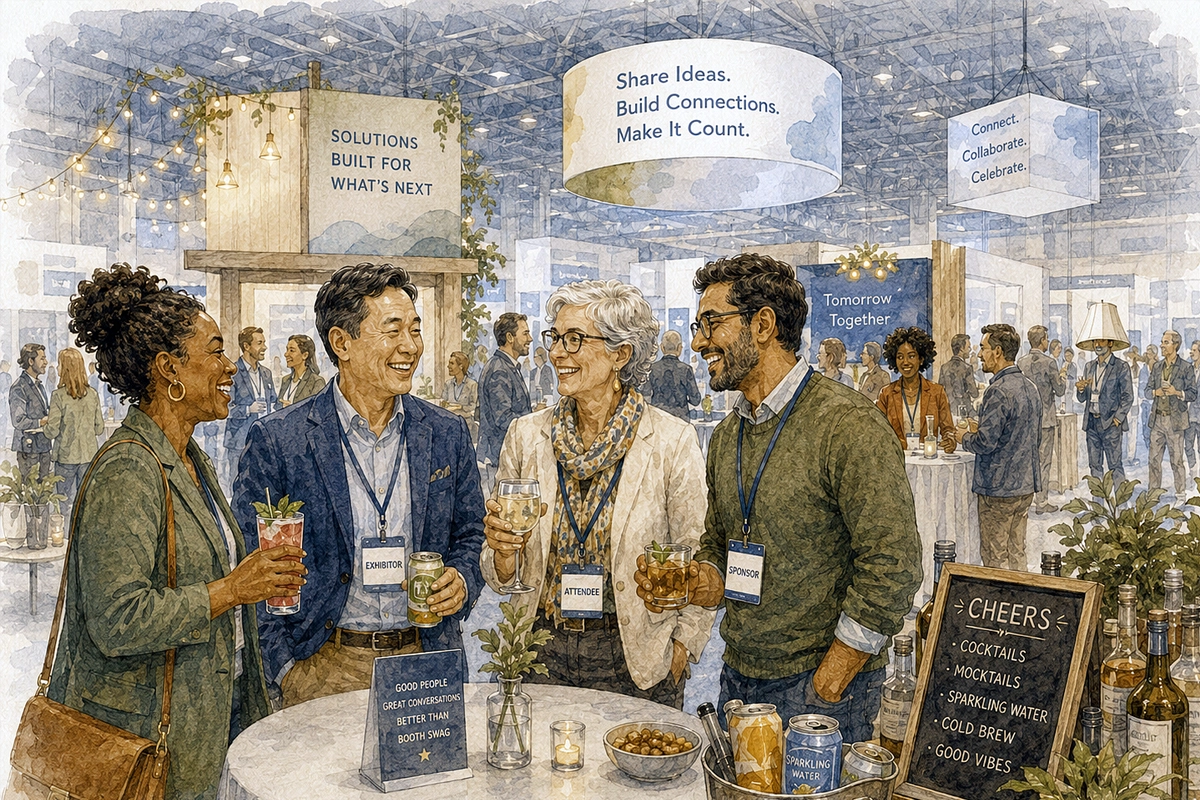


Anyone who has attended a tradeshow mixer knows the routine. The badges stay on, the drinks start flowing, and someone eventually says, “We should definitely work together,” with great conviction. With luck, the night ends with a few new contacts and no photos involving a lampshade worn as a hat or an ill-advised encounter with the office copier.
Alcohol has long been part of tradeshow culture. It appears at association receptions, booth happy hours, client dinners, hosted lounges, and late-night meetups. Sharing a drink can lower the temperature of a business conversation and help turn a name on a badge into an actual relationship.
That tradition is not disappearing, but the menu is changing, at least according to one recent report.
Link’s The Global Commercial Beverage Sector report identifies moderation, wellness, convenience, sustainability, and premium low- and no-alcohol products among the forces reshaping the beverage business through 2027. It also argues that product innovation and brand building are no longer enough. Competitive advantage increasingly depends on execution across every customer touchpoint. That has clear implications for tradeshows, where beverages serve as hospitality tools, sponsorship assets, and product samples.
The Happy Hour Is Changing
The report describes moderation as a long-term behavioral shift rather than a temporary trend. Low- and no-alcohol beverages are expected to grow faster than the broader alcoholic market, though from a smaller starting point. Alcohol-free beer currently leads the category by volume, while nonalcoholic spirits and wines are expanding through improved quality and premium positioning.
Zero Proof, Not Zero Personality
For event organizers, this does not mean replacing the cocktail bar with a cooler full of sparkling water and calling it wellness. The opportunity is to offer alcohol-free drinks that feel as intentional as the rest of the reception.
According to the report, improved quality and premium positioning are helping nonalcoholic beer, spirits, and wine move beyond their old role as consolation prizes for designated drivers. These products can now offer complex flavors, adult presentation, and a more polished experience.
That shift can also make industry events more inclusive. Some attendees do not drink for health, religious, personal, or professional reasons. Others may simply have an early call time, a morning keynote, or enough experience to know that Las Vegas feels considerably louder with a headache.
Ready to Drink, Ready for the Show Floor
Ready-to-drink products are another natural fit for live events. The report says convenience, portability, portion control, and immediacy are helping ready-to-drink formats outperform many traditional categories. Those qualities translate easily to booth sampling, sponsored lounges, mobile beverage carts, and grab-and-go hospitality.
A canned cocktail, functional water, cold coffee, or premium mocktail can be served quickly while still giving a sponsor room for packaging, storytelling, and brand recognition.
The report says consumers increasingly choose beverages for a particular moment or desired benefit. On a tradeshow floor, that could mean hydration in the morning, energy during the afternoon slump, and a more social drink after the exhibits close. The same attendee may want all three, preferably without waiting in another line.
Sustainability Goes Behind the Bar
Sustainability adds another layer. The report points to recyclable materials, lightweight formats, and more transparent environmental commitments as growing priorities for beverage brands. At an event, those promises become visible through cups, cans, refrigeration, shipping, serviceware, and waste collection.
A sustainability message loses some of its shine when the recycling bin is missing and the bar generates a small mountain of single-use plastic.
Outside the tradeshow industry, beverage companies face slower growth in mature categories, higher costs, regulatory pressure, supply-chain volatility, and growing scrutiny of health and environmental claims. Growth is concentrating in functional drinks, premium offerings, ready-to-drink products, and low- and no-alcohol alternatives.
The report’s central point is that a new flavor, formula, or package is not enough. Brands must execute consistently wherever customers encounter them, from retail shelves and digital platforms to bars, lounges, and live events.
For tradeshows, that experience still may include a cold beer or a well-made cocktail. It may also include a sophisticated zero-proof option, a functional beverage, or something designed to keep the conversation going without making the next morning memorable for the wrong reasons.
Link is a global marketing services partner serving beverage brands across multiple markets and channels. For more info and to read the full report, visit link-worldwide.com or download it here.
Related stories
Vegas Briefs: June Results, August Shows, and New Attractions