


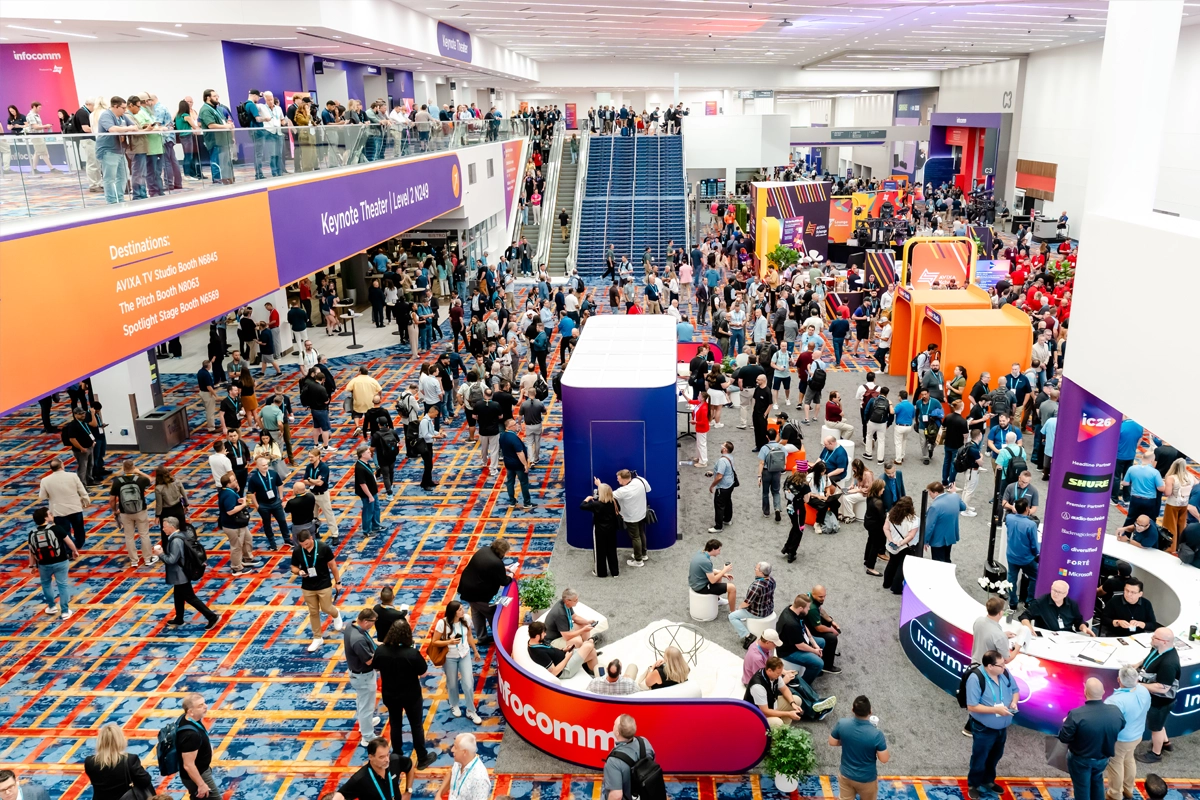


Exhibit sales may still pay the bills, but new research from the Center for Exhibition Industry Research (CEIR) points to a less obvious characteristic of stronger-performing tradeshows: they consistently measure performance and feedback.
CEIR’s 2026 Performance Benchmarking Playbook Series examines financial and operating performance across business-to-business (B2B) exhibitions. The research includes separate benchmarks for small, midsize, large, healthcare, and independently run shows.
The financial picture changes considerably with scale. Exhibit sales account for 60 percent of gross revenue across event sizes. Meanwhile, average net profit rises from 32 percent of gross revenue for shows under 50,000 net square feet to 42 percent for midsize events and 55 percent for shows with at least 200,000 net square feet.
But one of the more useful findings has less to do with square footage.
Stronger shows measure more
CEIR found that events consistently tracking key performance indicators and feedback, including Net Promoter Score (NPS), retention, and acquisition, outperform peers in revenue, attendance, exhibitor participation, and profitability.
That does not establish that measurement alone produces better results. It does, however, make another finding harder to ignore: many organizers still do not consistently track whether their attendees return.
Fewer than half of organizers in every show-size category track individual attendee retention. Among small and midsize exhibitions, only about one-third do.
Organizers are somewhat more likely to monitor new attendees, although fewer than half of shows across all three size categories track that metric.
Exhibitors receive more attention. Roughly six in 10 organizers track exhibitor company retention across the three size categories, while more than three-quarters of the largest shows track new exhibiting companies.
Benchmarks need the right comparison
CEIR designed the playbook series to give organizers benchmarks closer to the events they operate rather than relying on a single industry-wide comparison.
That matters when looking at numbers such as exhibitor retention. CEIR reports average exhibitor company retention of 73 percent for smaller shows, 78 percent for midsize events, and 69 percent for the largest exhibitions.
A 70 percent retention rate therefore means more when an organizer can compare it with events of a similar scale rather than the exhibition industry as a whole.
The research also indicates that most events remain on the path toward regaining pre-pandemic attendance and exhibitor participation. Against that backdrop, CEIR recommends combining retention, acquisition, NPS, and direct feedback when making decisions about programming, marketing, and outreach.
For organizers, the takeaway is less about collecting another dashboard full of numbers than knowing which numbers reveal the health of the show. Revenue shows what happened. Acquisition shows who arrived. Retention helps show whether they found enough value to return.
According to CEIR’s benchmarks, a significant share of the industry still does not consistently measure that last piece.
The Center for Exhibition Industry Research (CEIR) is the research division of the International Association of Exhibitions and Events. The 2026 Performance Benchmarking Playbook Series includes reports for small, midsize, large, healthcare, and independent business-to-business exhibitions. For more information and access to the reports, visit the CEIR Organizer Benchmarking Study page.
Related stories
Summer Session at University: Midyear Meetings in the Tradeshow Industry