



What an AI-Built Event Taught Us About the Future of Exhibits
Last fall, we ran an experiment inside Club Ichi that scared a lot of people (that was the point).
We called it Brains Behind the Bots, a live event built as part of an AI Hackathon. The premise was simple: what happens if we let AI help build an event from the ground up, in real time, with professionals watching every decision, mistake, and course correction?
A volunteer group of working professionals using AI in public (and dealing with the consequences).
What we learned is highly relevant for exhibit professionals right now.
Lesson 1: AI collapses time, but not responsibility or oversight
AI helped us move faster. Dramatically faster.
We used it to draft timelines, outline run-of-show options, generate early creative directions, pressure-test messaging, and explore multiple pathways in minutes instead of days. That time compression was real (and useful for a 6-week project run).
What it did not do was make decisions for us.
Every output still required human judgment. Someone had to decide what was right for the audience, what was feasible, what aligned with the experience we were trying to create, and what should never make it past a first draft. A lot never made it past the first draft. Sometimes AI sucks.
For exhibit teams, AI can speed up early design exploration, pre-show planning, content variations, and internal alignment. But it raises the bar on taste, discernment, and accountability. Faster tools make sloppy thinking more visible, and the AI slop is real. We learned a lot about the necessity of clear, concise, and DIRECT prompting to get useful results.
Obvious AI words like “performative,” “game-changing,” “no-fluff,” “Real,” (and so many more) can be seen a mile away. Humans with an eye for copywriting need to remove AI-isms and inject personality into content.
Lesson 2: The real skill is asking better questions
The biggest unlock was not the tools themselves, but learning how to prompt with intent.
The quality of AI output was directly tied to how clearly we could explain the problem, the constraints, the audience, and the desired outcome. Vague inputs produced generic junk, and often took us down a rabbit hole that just kept getting worse. Clear direction produced surprisingly useful starting points that we could expand on and actually leverage as useful jumping off points.
This is especially relevant in exhibits, where goals often arrive as half-formed requests to your team. “Make it pop.” “We need more engagement.” “It should feel premium.” Friggin’ clients, amiright?
AI exposes those gaps immediately. If you cannot articulate what success looks like, the machine will hand you noise – hilariously made-up noise (this is what we call AI slop). Exhibit professionals who can translate fuzzy objectives into clear direction will become exponentially more valuable and can craft prompts that will garner incredible results.
Example prompt:
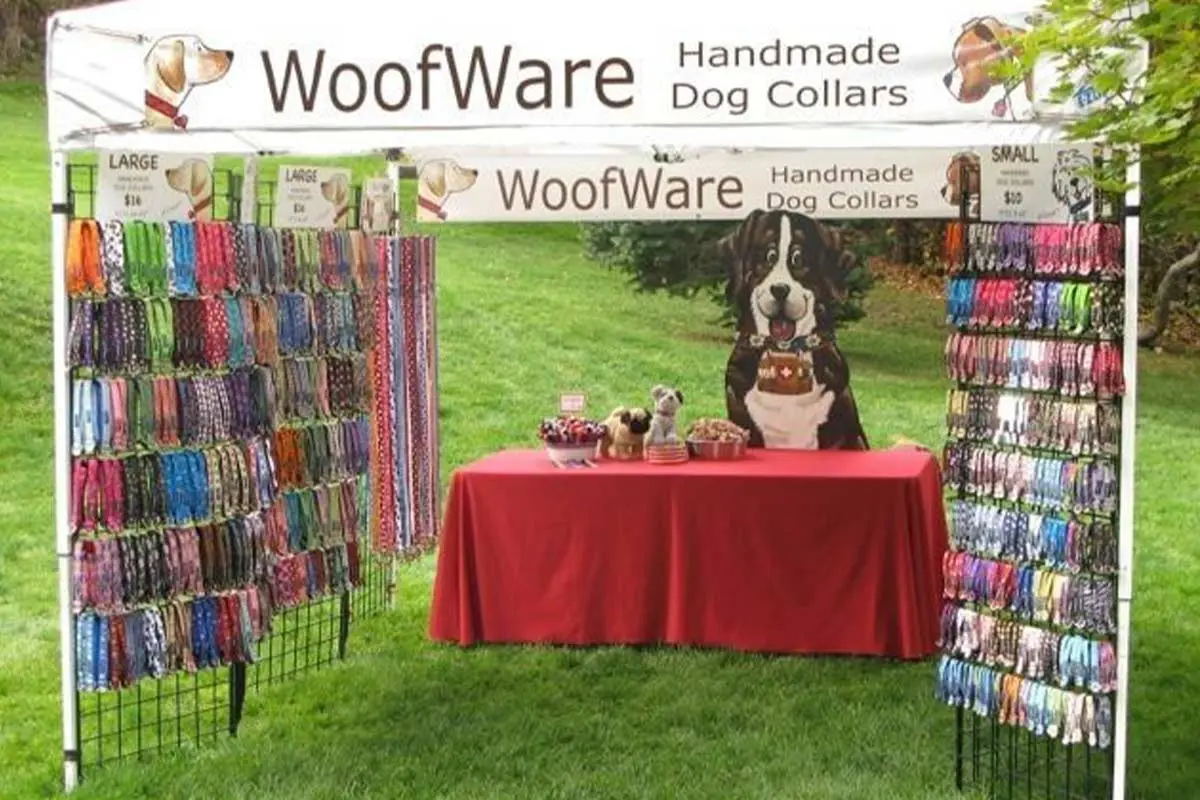
Design an exhibit that’s a 10×10 for a pet tradeshow. it’s a dog collar company.
Result:
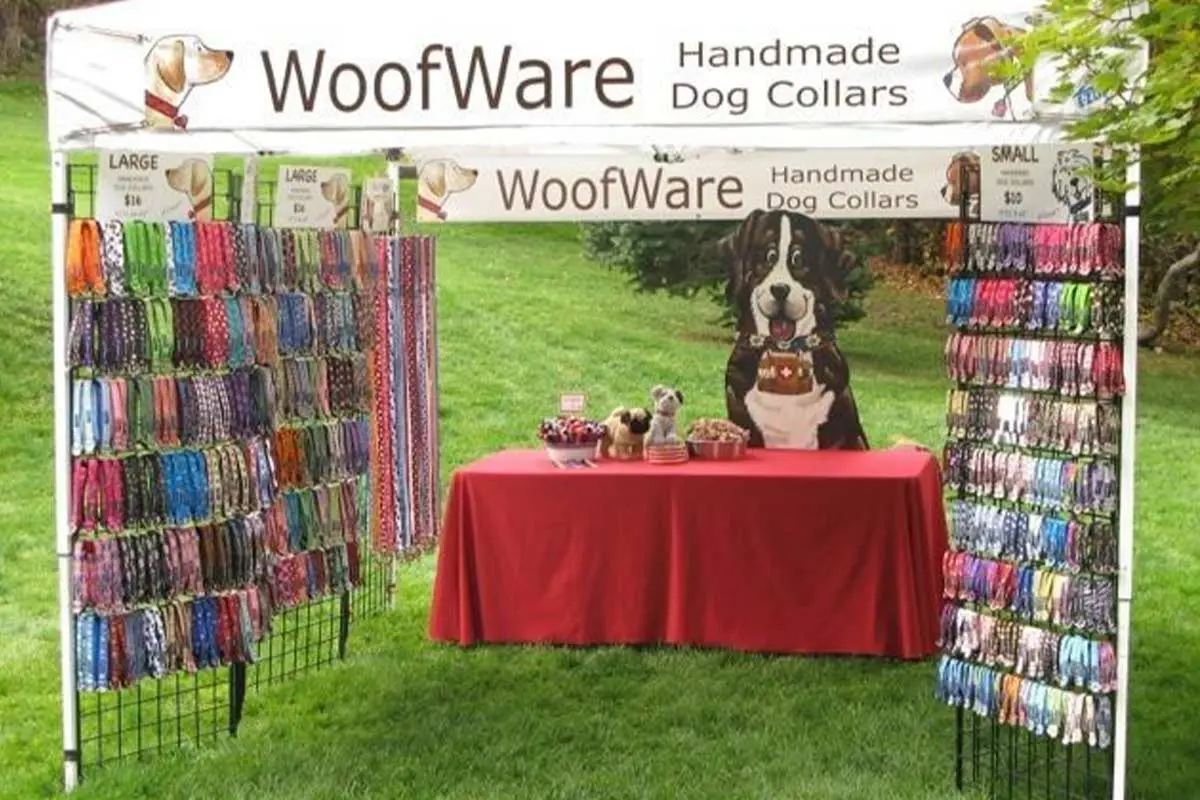
Alternate prompt with more details:
I’m crafting a 10×10 booth for a dog collar company for a wholesale pet tradeshow. It’s indoors in a convention center, and my space is small compared to others. Our specific unique proposition is that the collars and leashes are “no chew” material so your dog cannot chew through them. We will have a product display, but also need an engagement tactic to bring people into the space for a conversation. What ideas do you have to make this space inviting, engaging, and a little bit whimsical? Design what this would look like. Give me a life-like rendering of the space.

Lesson 3: AI is great at options. Humans are great at adding context.
One unexpected benefit was how AI helped us explore paths we might not have considered. Alternative formats, different narrative arcs, variations on structure. It became a brainstorming partner that we could play with for hours, but it had no sense of context.
It did not understand the politics of a client organization, the reality of a show floor, union rules, load-in constraints, or any of those contextual intelligence moments. You know what they say: knowledge is learned, but wisdom is earned. AI has earned nothing.
So while AI can widen the field of possibility, the humans decide what survives and turns into something.
Lesson 4: Transparency builds trust
We livestreamed parts of the build by hosting our weekly meetings live on YouTube. We showed where things broke (like when our AI bot host & emcee’s voice was suddenly removed from the library of voices and our last video had him with a different voice!). We let people see a registration report bot go rogue and spam Slack until it had to be shut down (Anyone remember the 80s movie Short Circuit? Yeah, No. 5 had to be disassembled).
Counterintuitively, this increased trust, though. Not necessarily in the AI tools, but in the fact that “regular people” could use these tools, experience some challenges, and overcome them.
Lesson 5: The future role is director, not operator
The most important shift was psychological.
AI pushed us out of “doer mode” and into “director mode.” When we learned about the concept of “vibe coding” (creating programs and websites without ever needing to learn how to code), we realized that it’s truly possible to spend less time spent building from scratch and more time evaluating, shaping, and steering the direction of the program.
For exhibit professionals, this signals a role evolution. The value has always been in how well you can orchestrate systems and make smart calls under constraint. So now it’s possible to speed up the task execution and actually have time to be more strategic.
One thing was 100% for sure: AI did not reduce the need for humans in this project, but it did scale our ability to execute this program to a level never before possible with a team of 10 and just 6 weeks.
- Full scope and timeline development so the team was on the same page? Check. Took about an hour.
- Design the brand, the logo, the messaging, and the hypersite? Check. Took about a week.
- Professional-looking emcee videos to guide the way? Check. Took about a week.
- Our own custom task manager bot to keep everyone on time and accountable? Check. Took about two weeks.
Why this matters now
AI has already cannon-balled into the event ecosystem, whether teams are ready or not. The risk isn’t in adopting tools too slowly, it’s in adopting them without upgrading how decisions are made in the first place.
While Brains Behind the Bots wasn’t about exhibits or booth, it showed us something important for all parts of the events industry: the future belongs to event professionals who can combine machine speed with human ideas, judgment, and (perhaps most importantly) responsibility.
The bots can help. But the brains still run the show.