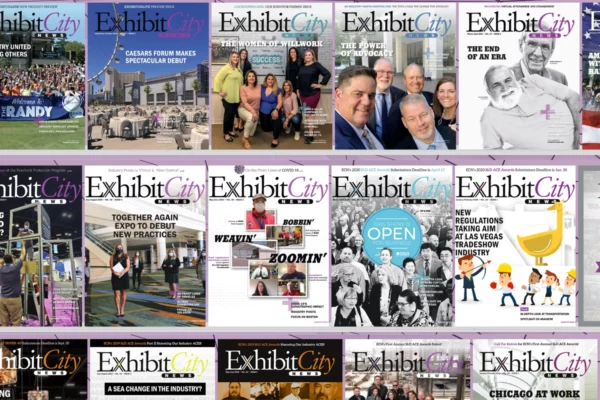


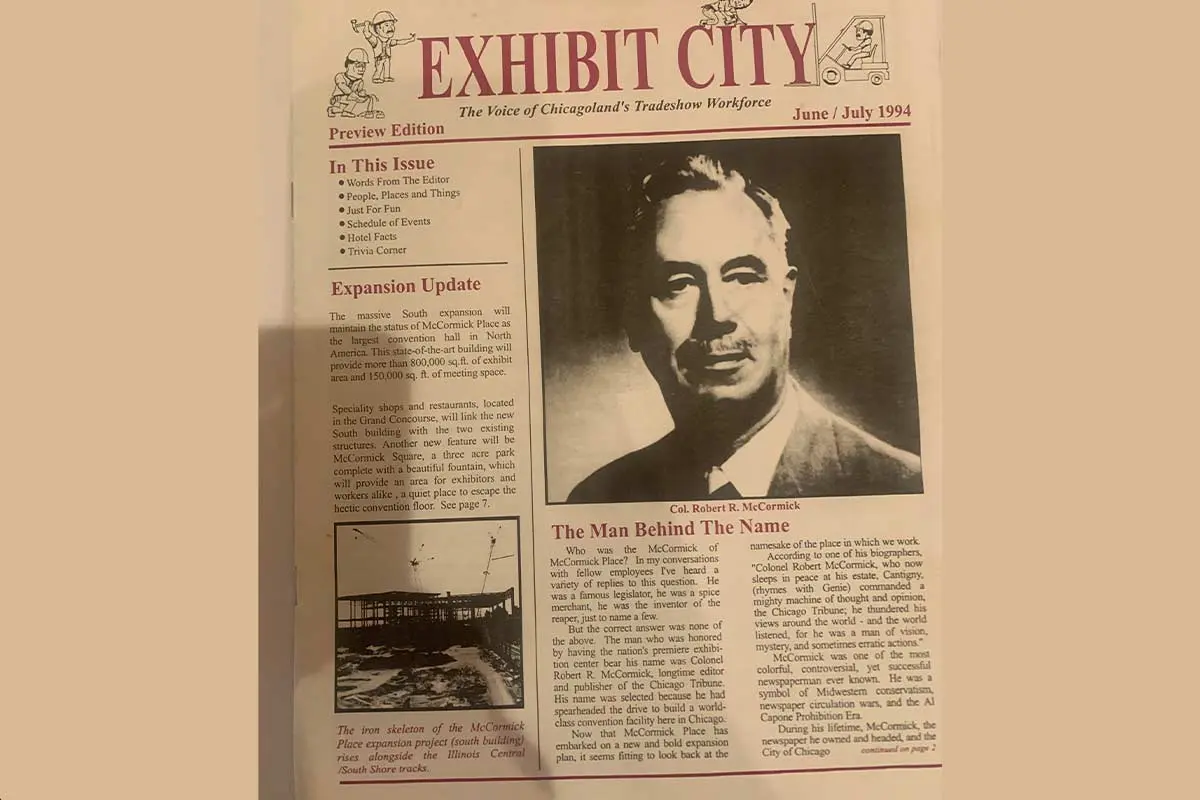


In June 1994, the first issue of Exhibit City (now Exhibit City News) featured a call to action for Chicago’s tradeshow industry. “No other convention city can match what we have to offer,” wrote Editor and Publisher Don Svehla. The issue highlighted McCormick Place’s South Hall expansion, a large and skilled workforce, and a national reputation as the capital of conventions. That issue was only four pages, but it marked the start of three decades of reporting from the center of one of the country’s most important tradeshow regions.
At the time, McCormick Place stood as a symbol of growth and civic investment. “We will not idly stand by while other cities try to gain at Chicago’s expense,” Svehla wrote, referring to the expansion as essential for staying competitive into the 21st century.
A Changed Landscape
Thirty years later, the tradeshow landscape has changed. Las Vegas, Orlando, and several regional cities have gained market share. Some events that once called McCormick Place home now rotate elsewhere. Chicago may no longer lead in total show volume, but it remains one of the most active and resilient tradeshow markets in the country.
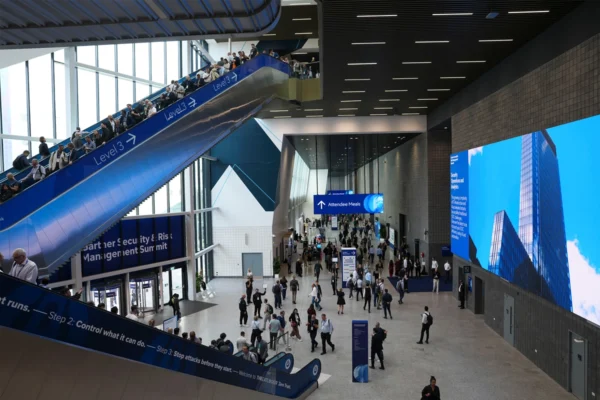
Recent data confirm this. McCormick Place hosted more than 48,000 attendees during PACK EXPO International in November 2024. It was the largest PACK EXPO ever held, with more than 2,700 exhibiting companies spread across all four buildings. Exhibitors focused heavily on automation, digitization, and filling labor gaps—concerns that reflect broader trends in the industry.
The Labor Equation
Labor remains central to the city’s tradeshow economy. In November 2024, McCormick Place saw its highest-ever single-day request for electricians. A total of 719 members of the International Brotherhood of Electrical Workers Local 134 (IBEW 134) were dispatched for work related to the Microsoft Ignite teardown and the Radiological Society of North America (RSNA) setup. This included 300 apprentices, showing both the demand for workers and the ongoing efforts to build up the labor pipeline.
Costs for labor in Chicago reflect its scale and structure. As of December 2024, straight-time full-package rates for key trades at McCormick Place ranged from $57 per hour for projectionists to nearly $100 per hour for electricians. Overtime and double-time rates rise accordingly, with most trades requiring four-hour minimums per shift. These rates, verified by the Metropolitan Pier and Exposition Authority and union contracts, offer transparency into the costs that shape the region’s competitiveness.
Compared to markets like Las Vegas and Orlando—where labor rules and structures can vary by venue, general contractor, or event—Chicago offers a more standardized environment through its unionized workforce. While not always the most cost-effective option, its consistency, coordination, and capacity to support complex, large-scale events remain key advantages for planners.
Busy on All Fronts
Outside of the halls, Chicago remains a busy host city. In June 2025, it welcomed more than 6,000 delegates for IPW 2025, the U.S. Travel Association’s international inbound travel tradeshow. In July, it hosted the Institute of Food Technologists (IFT), the National Medical Association, the Advertising Specialty Institute (ASI) Show, and other major conventions.
Tourism and business travel continue to rebound. According to Choose Chicago, the city welcomed 55.3 million visitors in 2024, generating $20.6 billion in economic impact. Of that total, conventions and events contributed more than $3 billion. A record 2.65 million future hotel room nights were booked, and international visitation topped two million for the first time since 2019.
Culture, Cuisine, and Commitment
Cultural and culinary events add to the city’s appeal. Sueños Festival returned to Grant Park for Memorial Day weekend, and Beyoncé’s May tour stop broke the city’s hotel booking record with 46,450 rooms sold in a single night. New dining and hospitality projects, such as the Talbott Hotel’s reopening and Electric Shuffle’s arrival in River North, help keep the city fresh for visitors and event planners alike.
The 2025 National Restaurant Association Show also drew more than 53,000 attendees to McCormick Place in May. Lisa Malikow, senior vice president for the show, confirmed its commitment to Chicago through 2032. “This city has the infrastructure, venues, and skilled labor to host events of any proportion,” she said. “Chicago is without a doubt one of the greatest convention cities in the world.”
At the 2025 Choose Chicago Annual Meeting, Mayor Brandon Johnson emphasized the city’s role in global tourism. “Whether it’s conventions, major sporting events, or family vacations, visitors from around the world know they’ll find an experience that’s welcoming, inspiring, and unique to Chicago,” Johnson said.
Looking Ahead
Chicago’s tradeshow future may look different than it did in 1994, but the fundamentals remain. The city continues to attract high-value shows, invest in infrastructure, and serve as a vital link between business, labor, and culture. The foundation is solid—and the story is still unfolding.
This story originally appeared as a truncated version in the Q4 2025 issue of Exhibit City News, p. 80. For original layout, visit https://issuu.com/exhibitcitynews/docs/exhibit_city_news_-_oct_nov_dec_2025/80.