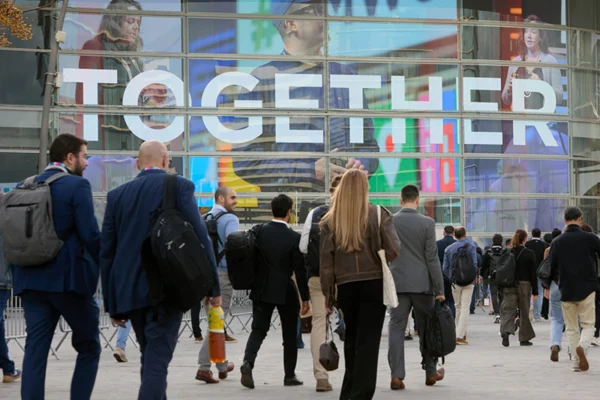




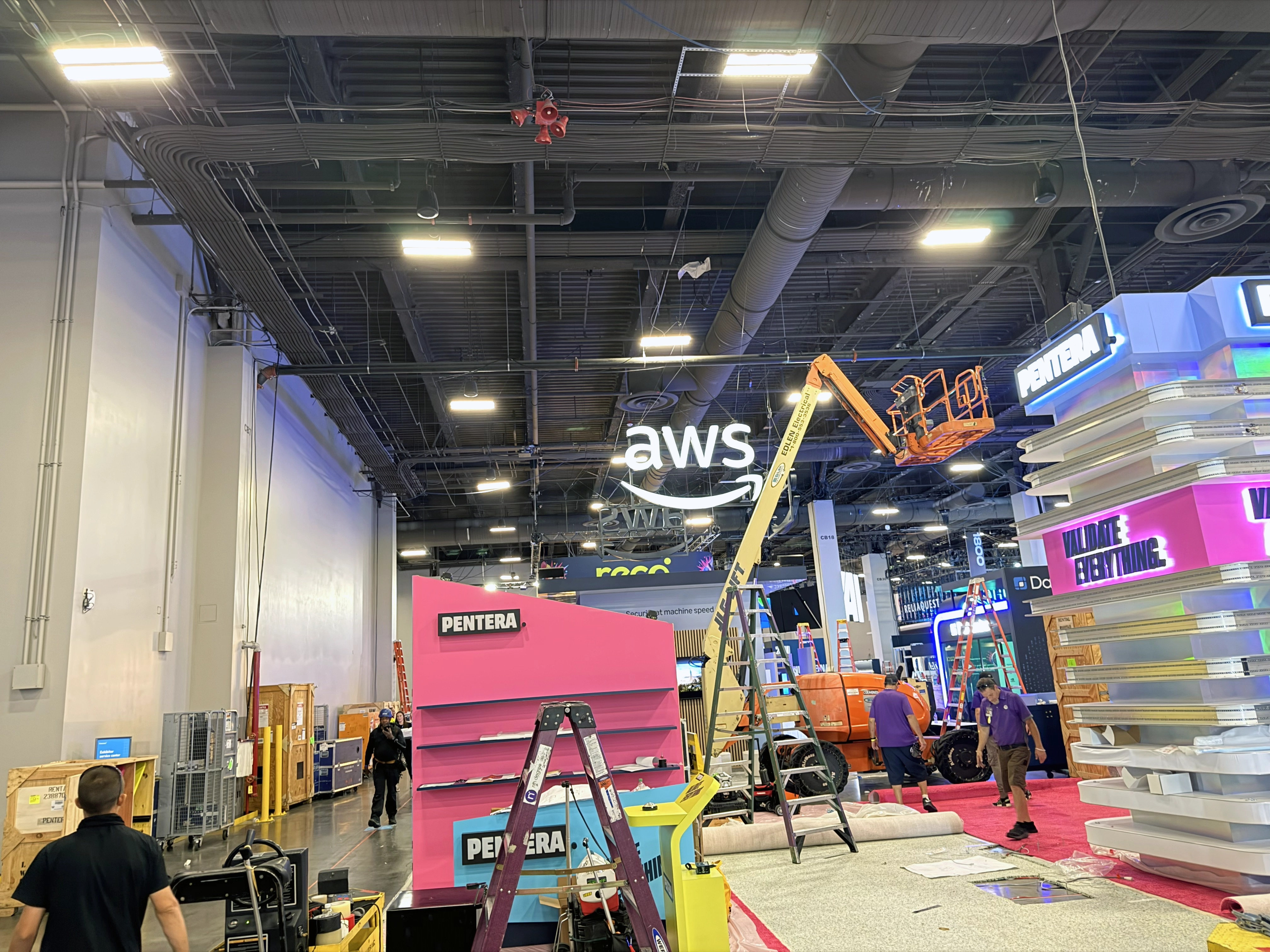
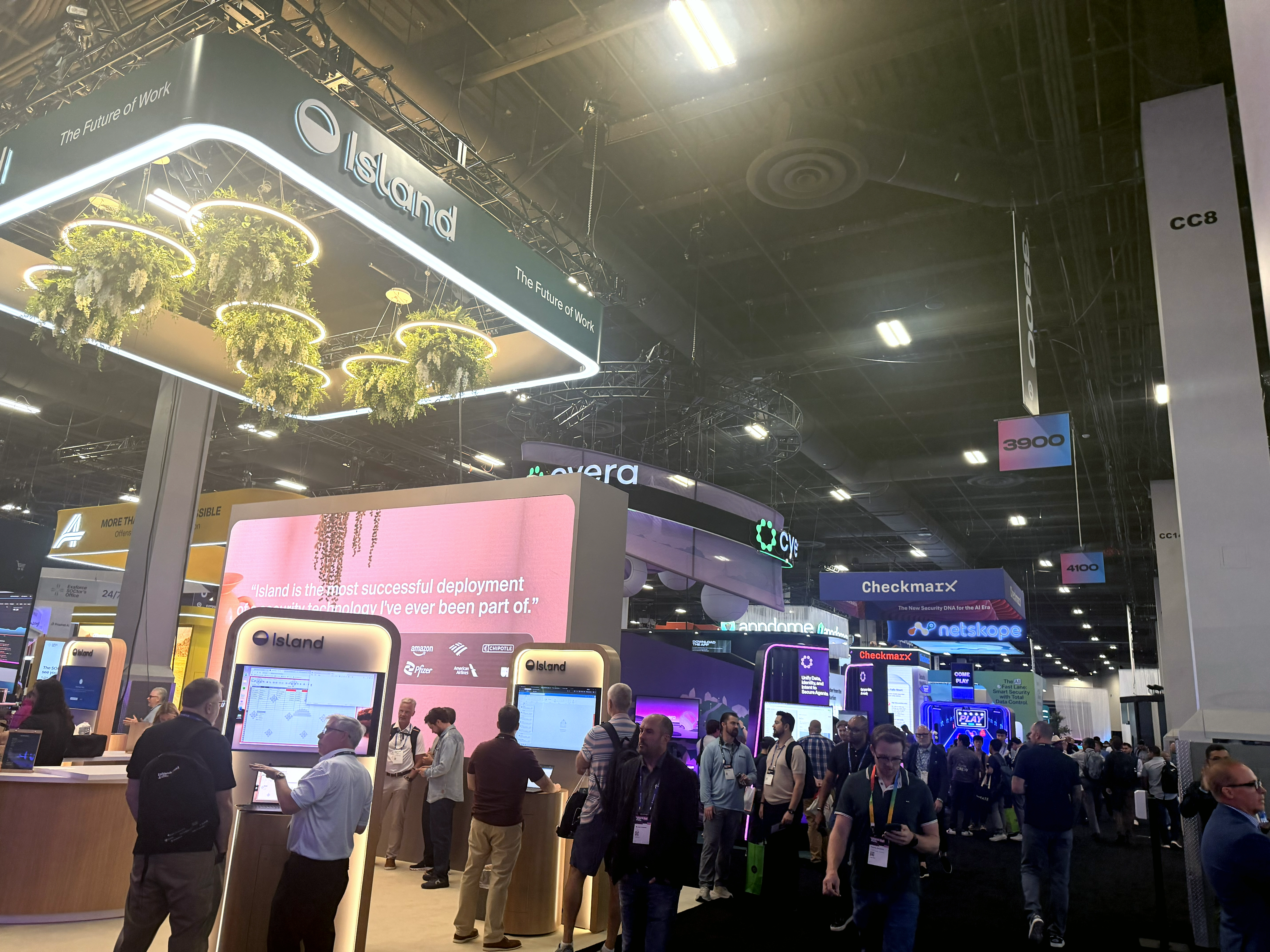
Every year, thousands of cybersecurity professionals descend on Las Vegas for Black Hat USA to unveil the latest security research, emerging technologies, and evolving cyber threats. Black Hat USA 2026 ran Aug. 1 through Aug. 6 at Mandalay Bay in Las Vegas, with more than 400 cybersecurity vendors and startups exhibiting in its Business Hall.
For many outside the information technology world, the conference can seem far removed from their day-to-day business.
But for the live events industry, Black Hat may be one of the most important shows you aren’t attending.
Today’s tradeshows, conventions, and corporate events are no longer powered solely by exhibit halls, forklifts, and production crews. They’re built on an increasingly connected ecosystem of cloud software, artificial intelligence (AI) applications, wireless networks, digital credentials, mobile apps, registration platforms, radio-frequency identification (RFID) tracking, audiovisual networks, and smart devices.
As our industry embraces digital technology, cybersecurity is becoming just as essential as logistics, safety, and operations.
And the financial risk is growing. The FBI’s Internet Crime Complaint Center received more than 1 million complaints in 2025, with reported losses approaching $21 billion.
The question every event professional should be asking isn’t whether cyber threats are real. It’s this: Is your event business prepared for a cyberattack?
Black Hat 2026: The Biggest Themes
Black Hat USA 2026 showcased technical presentations, hands-on training sessions, product demonstrations, and security tools focused on increasingly complex cyber threats.
While many of the technologies were designed for large enterprises, government agencies, and critical infrastructure, the same lessons apply directly to the live events industry.
Several themes emerged throughout the conference.
Artificial Intelligence Is Reshaping Cybersecurity
Artificial intelligence dominated conversations across keynote presentations, technical briefings, and product launches.
Security vendors demonstrated AI-powered platforms capable of identifying threats, automating investigations, and responding to incidents in seconds rather than hours. Unfortunately, cybercriminals are using AI just as aggressively.
The FBI received 22,364 complaints involving AI in 2025, representing more than $893 million in reported losses. The agency says criminals are using AI for fake social profiles, cloned voices, fraudulent documents, and convincing videos.
Attackers can also generate highly convincing phishing emails, impersonate executives, create fraudulent invoices, and develop malware faster than ever before.
That matters in an industry accustomed to rush payments, vendor changes, freight deadlines, and last-minute requests. Business email compromise alone accounted for more than $3 billion in reported losses in 2025, according to the FBI.
For event companies, these increasingly realistic attacks present a significant business risk.
Identity Has Become the New Perimeter
One recurring message throughout Black Hat was that organizations can no longer assume everyone inside their network should be trusted. Instead, modern security focuses on verifying every user, every device, and every connection before granting access.
For the events industry, that philosophy extends beyond IT. Who has access to client proposals, booth renderings, production schedules, computer-aided design drawings, freight manifests, executive travel itineraries, and new product launch information?
Protecting digital assets has become just as important as protecting physical assets.
Cybersecurity Is No Longer Just an IT Issue
Perhaps the biggest takeaway from Black Hat was that cybersecurity has evolved into an operational issue. That message should resonate with every event organizer, exhibit house, production company, and venue.
A cyberattack doesn’t just affect computers. It can stop an event.
The Modern Show Floor Is a Digital Ecosystem
Twenty years ago, an exhibit hall was largely mechanical. Today, it’s digital. Every event relies on interconnected technology working together.
Registration systems communicate with badge printers, while lead retrieval scanners connect to cloud databases. Digital signage pulls content from networked media servers, and LED processors receive live video feeds. Wireless microphones, lighting consoles, and show-control systems operate over internet protocol networks. Meanwhile, labor schedules are managed through cloud platforms, and freight movements are tracked through GPS and RFID technologies.
The result is greater efficiency, but also greater exposure. A disruption to one critical system can create a cascading effect across event operations.
Imagine arriving on opening morning to discover that registration kiosks can’t communicate with the attendee database. Badge printers stop responding, payment terminals fail, and digital signs go dark. Presentation files stored in the cloud become inaccessible, and exhibitor portals are offline.
The building still has power, but the event simply can’t function.
Why Event Professionals Should Pay Attention
Cybersecurity has traditionally been viewed as someone else’s responsibility, but that mindset is changing.
Whether you’re an exhibit builder, audiovisual provider, decorator, labor company, venue, general service contractor, or event organizer, you’re responsible for safeguarding client information, operational systems, and business continuity.
Questions every company should be asking include:
- Are our production laptops protected and regularly updated?
Do we require multi-factor authentication?
Who has administrative access to our systems?
Are show files backed up before move-in?
Can we continue operating if internet connectivity is lost?
Could our team recognize an AI-generated phishing email?
Do we have a response plan if a cyber incident occurs during an event?
The answers may determine how quickly your company recovers from an attack, or whether operations can continue at all.

Cyber Checklist: 10 Questions Every Event Company Should Ask Before Move-In
- Is multi-factor authentication enabled on all critical systems?
- Have production laptops and servers been updated with the latest security patches?
- Are all show files backed up both locally and securely in the cloud?
- Is there a secure guest Wi-Fi network separate from production systems?
- Who has administrator access to event technology and cloud platforms?
- Can employees identify phishing emails, fraudulent invoices, and AI-generated scams?
- Is there a documented incident response plan if systems fail during an event?
- Are connected audiovisual, registration, and digital signage systems monitored for unusual activity?
- Have vendors and subcontractors been granted only the access they need?
- Could your event continue if a critical digital system went offline?
Related stories
Tradeshow Industry Outlook: ExSys Panel Examines AI and Costs
GAP and BCJ Group Partner on Event Security and Guest Services