

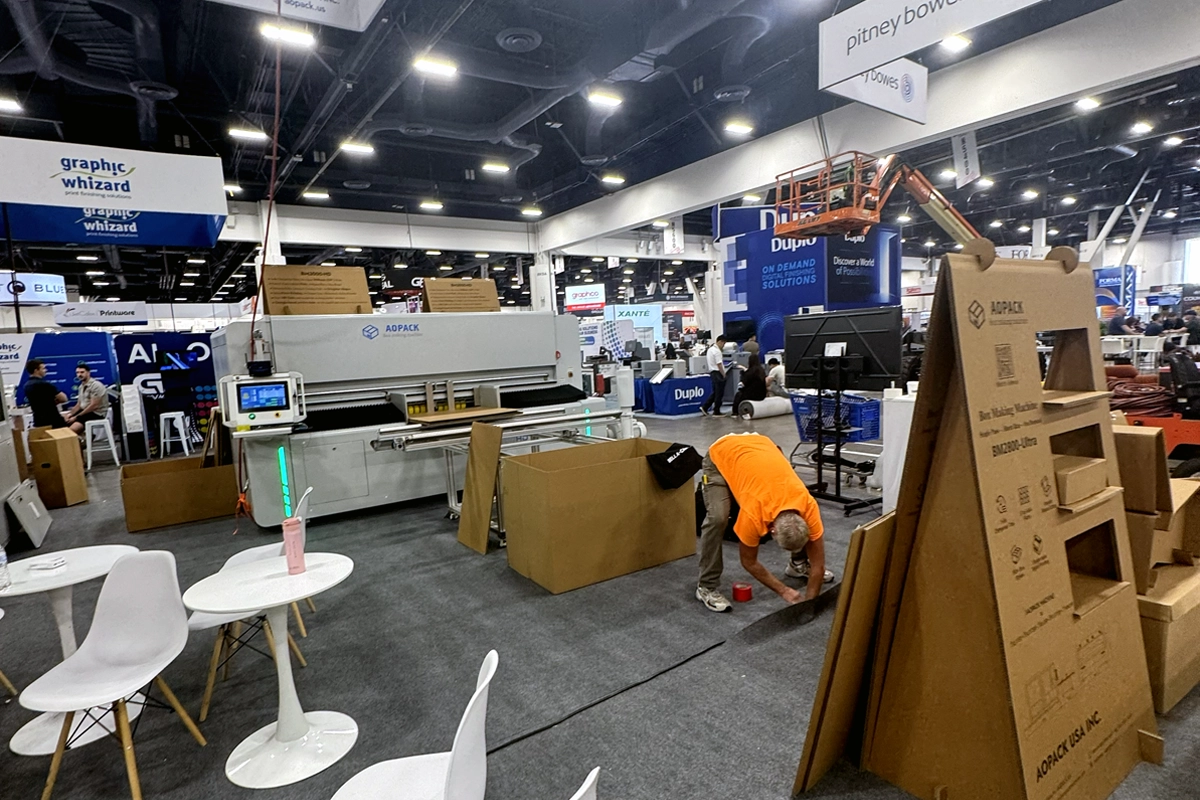


When an exhibit opens at a tradeshow, attendees only see the finished product. They see the lights that illuminate the graphics, video and audio that support the presentation, the furniture where they sit and engage with the product and presentation of the booth, and the booth itself—flooring, walls, counters and so on. What attendees never see is all the work that went into getting that exhibit booth ready to go.
A successful exhibit begins long before the first attendee hits the floor. After months of design and planning, installation begins. Freight arrives, electrics are readied, crews are organized, and every component has to be installed in the right order, right before the show starts. Then when the show is over, it all has to go out in reverse.
Exhibit City News (ECN) took a look at a typical three-day load in and one day load out, from the first walk of the empty space to the moment the last piece of freight leaves the hall. Step inside the shoes of a labor team as they build the show.
The following section is designed to be a “how to” explanation for those beginning careers in this sector of the industry.
Load-In: Documentation
Ideally you want to arrive early, not just before your crew arrives but also your freight. The first thing to check at your booth space is that the electrical service has been installed properly. You also want to make sure the booth footprint is what is on your rendering.
After you pick up the required wristbands and other credentials for your crew, you need to set up the workstation. Not only will it serve as check-in, but it will also be your administrative area. Time slips, pens or pencils, ladders, gang boxes and any other necessary equipment for the install needs to be ready for the crew’s arrival. As your crew arrives you’ll need to get them signed-in, credentialed, then divide labor, and assign booth leads.
Don’t forget your freight. Make sure your crates, skids, pallets–all booth components–have been delivered to your space. Photograph everything. Document your freight before and during the unpacking. That not only confirms the condition and contents but will also provide a reference for repacking later.
Load-in: The Build
Now it’s time to begin unpacking and building your booth. The crew will begin assembling the exhibit according to the rendering and installation plan. Crew leads and supervisors will watch progress and track equipment, ensure safety, and address problems.
And problems will arise, that’s a given. But that’s one of the things people in the tradeshow industry love–solving problems. Every load-in is different, and unique challenges are part of that.
Your booth is complicated; it’s going to take three days for load-in. As noted earlier, the first day will be concerned with electrics. Flooring comes next, and then walls, anything hanging, and your lighting. Your display is involved: monitors, touch screens, and an LED wall. All of that will get installed on the first and second days.
The third day will be the final tweak of the booth. You’ll finish placing graphics and tweaking equipment placement. There’s also your furnishings: stools, chairs, sofas, and tables. This will get sorted on the third day.
Then you’re ready to perform your show-ready check. This is a walk of the finished booth. You will complete your punch list and correct any outstanding issues and then confirm that the exhibit is ready for show start. It’s here that the exhibitors running the booth for the show will do their own final check of the elements, then prep their presentation and to make sure it works with the elements the booth provides.
Load-Out
So the show is a success. Attendees and show organizers can’t stop saying enough about you booth. Product was demonstrated, connections were made. Now, more people than ever know about your client’s business and what it offers. The show ends, it’s time to tear down.
The crew starts dismantling the exhibit wherever they can while you wait for your empty crates and containers to be brought to your booth. First confirm that all your crates, skids, pallets and other containers have made it back to the booth. You’ll need it all to get everything back home.
Breaking down the exhibit will usually be the reverse of putting it up. Graphics get put away, furnishings are secured. Just as you started from the bottom and went up, you’ll finish from the top and go down. Hanging displays, lights, all that A/V equipment that made your booth dazzling is packed. Then come the walls themselves; panel after panel, flat after flat. Finally comes flooring and base electrics.
Remember to use your load-in photos to repack your freight. They’ll guide returning the materials back to their original crates and containers. Try to replicate it as closely as possible to the load in; this helps the warehouse back home track return inventory.
Then you organize your freight according to its destination. Are there split shipments, or items being scrapped rather than being returned? Count every crate, pallet, skid, and containers. Photograph the packed shipment and verify each piece to make sure everything’s accounted for.
Don’t forget your bill of lading. Photograph the paperwork and get it to the service desk. Make sure to document your submission, your time stamp, whatever paperwork you need. Once your freight is on the road, you will make your final walk-through. You want to make sure you’re not leaving behind any freight, equipment, client property, and especially any of your tools (a mistake more common than anyone would like).
In Conclusion
That’s the show, or at least the load-in and load-out. The reality is that labor teams do far more. Even a well-planned and organized show may have, and in fact most of the time will have, problems or unexpected contingencies. But that’s part of the tradeshow life; and the better planned and more organized a load-in or out is, the more exhibitors will be able to absorb unexpected twists and turns and have the kind of show they promised their client. In many ways, getting an exhibit out on the floor, and getting it safely back home, is its own show.
ECN would like to thank Dennis Taylor and Gabriel Taylor of Black OPS Show Services for their assistance in writing this article.
This story originally appeared in the Q4 2025 issue of Exhibit City News, p. #78. For original layout, see Print Version