



by Glenn Hansen
With respect to the “weight of the lift,” audio and visual (A/V), staging, and lighting have the most immediate effect on cost efficiency for a supply chain. It makes sense that this element of the event supply chain were early adopters even if they did not realize they were being more sustainable. Nonetheless, it is good to refresh steps the meeting planner or exhibit manager can take to ensure a highly sustainable solution.
Looking at the guidance provided by the Net Zero Carbon Events (NZCE) initiative’s Better Stands program, Experiential Designer and Producers Association’s (EDPA) “From Build to Breakdown: Sustainability in Exhibitions,” Event Industry Council’s (EIC) Sustainable Event Standards, and The Exhibitor Advocate’s (TEA) Sustainability Sourcing Compass, here are things we should be doing.
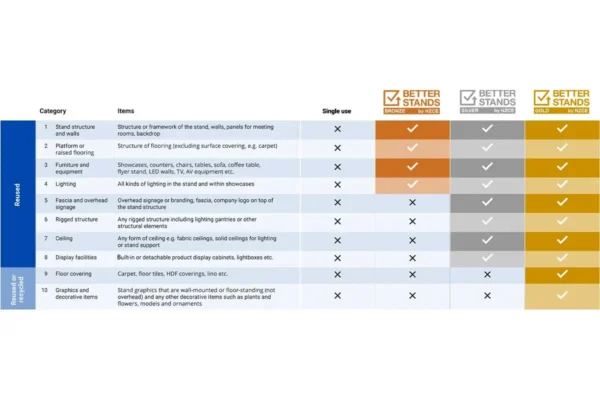
Reusability is the key word. A/V, lighting, and staging are purpose built to be reused. The Better Stands initiative wants displays, LED walls, TV and A/V equipment, and all lighting in booths and showcases to be reused to attain their bronze medal. To move up to their silver status, all rigged structures, lighting gantries, product display cabinets and lightboxes must be reuseable.
The EDPA echoes the call for reusability and adds LEDs should be used instead of incandescent bulbs and electronic display equipment (monitors, projectors, equipment, appliances) should meet Energy Star guidelines. Whenever possible, opt for units with serviceable, non-custom parts to maximize their lifecycle and ensure sustainability. Although digital signage is the rage, the EDPA recommends considering the lifespan of such and the environmental impact of its production. If there is an alternative with less environmental impact, it should be used.
The EIC advises limiting power consumption during rehearsals, off-show periods, and any time when audiovisual or lighting equipment is unnecessary. It also recommends reducing scenic materials by offering scenic component rentals versus one-time builds, using reusable sets, or alternatives such as stage mapping or stage projection. There should also be greater use of rechargeable batteries and recycling of batteries at their end of life. All e-waste should be donated by suppliers for recycling with a tracking mechanism in place to support reporting and verification.
The Exhibitor Advocate assists event planners and exhibit managers by providing direction with the Sustainability Sourcing Compass. Organizations are encouraged to review their sustainable procurement policies (or lack thereof) on an annual basis. Are the suppliers to the events industry asking their supply chains what they are doing to be more responsible and eco-friendlier? The Compass calls for suppliers to describe their policy for purchasing environmentally and socially preferable consumables with post-consumer recycled, biodegradable, or locally sourced content.
With respect to waste, suppliers are asked if packing materials are eco-friendly. Instead of shrink-wrap are Polyolefin or bio-based materials used? What is the reusability of packing crates, boxes, and other containers?
The Compass calls for users to ask A/V and staging providers to issue a post event report to include measurements of the freight in and out of the event to include weight and distance along with the transportation of staff and crew to be on-site at the event. To reduce the emissions of these, suppliers are asked how much local labor and local equipment sourcing will be used as well as asking if emission offsets will be purchased.
Regarding move-in and move-out, suppliers are expected to reduce freight emissions by consolidating shipments, minimizing partial truckloads, and sourcing locally with preference to regional warehouses. They are also asked to think smarter about load-ins. Suppliers should plan for efficient dock scheduling. Pre-rig where allowed to reduce lift time and reduce overtime.
A/V, lighting, and staging are the highest-impact places to cut emissions without hurting show quality. Most audiences never notice the difference, but the clients will appreciate the power bill and carbon footprint.
Sustainability creates conversations between exhibitors and service providers. From these conversations we learn what clients care about. They want lower power costs, faster load-ins, less heat on stage, less waste to landfill, lower carbon emissions and clear and clean sustainability reporting.
Check out the referenced sources and put them to work for you to ensure a more sustainable event.
Image Caption: A dynamic large-scale event produced by Europalco, showcasing advanced lighting design, immersive staging and high-impact visual effects. The scene reflects Europalco’s technical expertise and innovation in live event production, aligning with the company’s upcoming presentations at IBTM World 2025.