

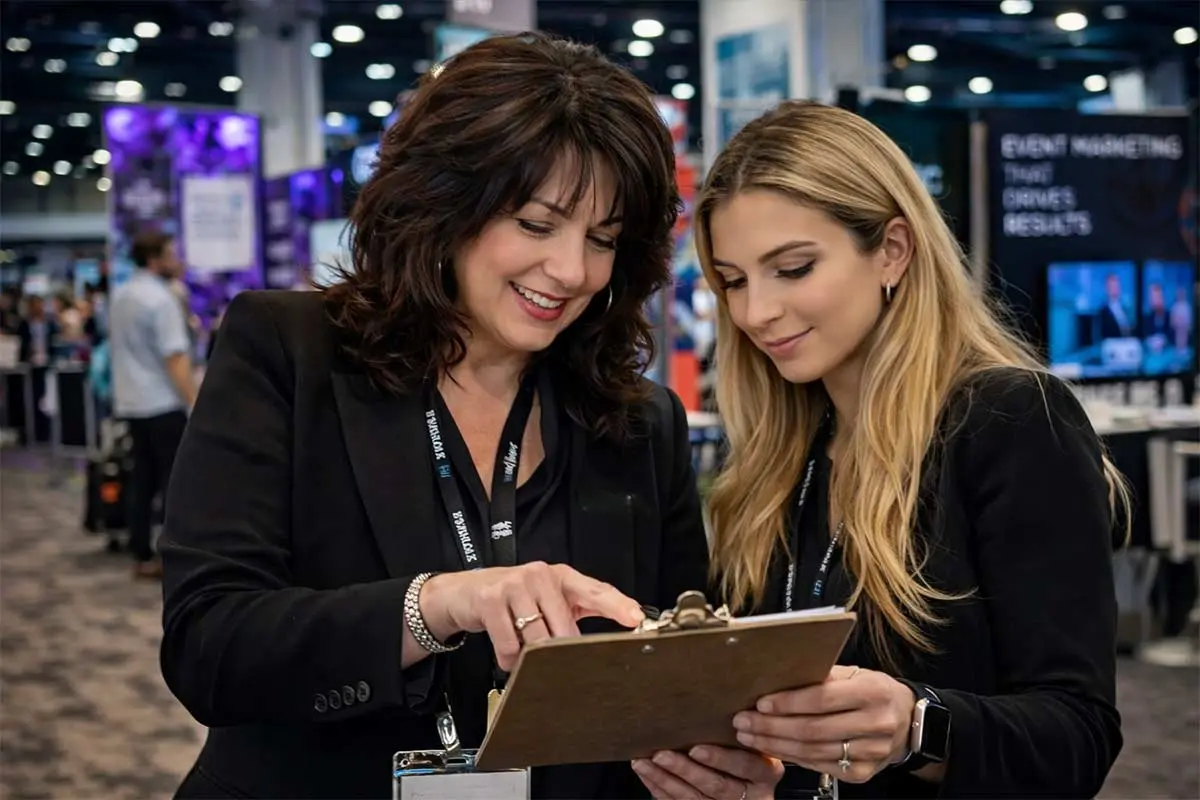


Why mentorship and experiential leadership will define the future of our industry
The exhibit and event industry is expanding. The talent pipeline to sustain it may not be. That is not a workforce issue, necessarily. It is more of a visibility issue.
Most young professionals do not know this career exists. They graduate with degrees in marketing, design, communications, and business, yet few are introduced to an industry where creativity meets strategy, where logistics meets storytelling, and where real-time problem solving drives measurable business results.
Trade shows, corporate events, and experiential environments are often viewed as niche. In reality, they represent a growth engine hiding in plain sight.
The data reinforces this shift. Investment in face-to-face continues to accelerate, with 59 percent of B2B marketers planning to increase spending on in-person events and trade shows in 2026, ranking just behind AI-driven tools in priority.1 At the enterprise level, 74 percent of Fortune 1000 marketers are increasing event budgets, while 57 percent of both B2B and B2C organizations plan to execute more events year over year.2 Events are no longer a supporting tactic. They have become a central driver of pipeline, engagement, and brand experience.
Organizations are not pulling back. They are leaning in.
At the same time, a generational shift is unfolding. The most digitally connected generation is also the one feeling the most disconnected. A significant number of Gen Z professionals report that technology has diminished their sense of connection and are actively seeking more in-person opportunities to build relationships and advance their careers.
That insight reframes the conversation. The exhibit and event industry is not competing with digital. It is completing it.
The Career They Are Looking For Already Exists
This industry offers something increasingly rare: a career that blends creativity with business impact. It demands professionals who can think strategically, communicate clearly, and execute under pressure. Individuals who can translate ideas into environments, navigate competing priorities, and deliver results in real time.
It is demanding, fast-moving, and multifaceted. It is also one of the most effective environments for developing confidence, capability, and professional presence. Live events give emerging professionals the opportunity to practice communication, decision making, and performance in real-world settings, where outcomes matter and learning happens quickly.
That is where the opportunity begins.
Mentorship Is Not Optional. It Is Strategic.
The next phase of growth in this industry will not be driven by design alone. It will be driven by leadership.
New professionals are not looking for static roles. They are looking for direction, development, and momentum. They want to understand not just what to do, but how to think. That requires mentorship by design, not by accident.
Organizations that intentionally connect experienced professionals with emerging talent create something far more valuable than training. They create continuity. They accelerate confidence. They shorten the learning curve in an industry where time, pressure, and performance matter.
Research continues to reinforce this. Eighty-six percent of Gen Z professionals prioritize mentorship and guidance, and 88 percent value hands-on, on-the-job learning as critical to their growth.4 Learning and development consistently ranks among the top reasons they choose to stay with an employer.5
This is where the exhibit and event industry has a distinct advantage. It is one of the few environments where learning happens in motion, where strategy is directly connected to execution, and where individuals can see the immediate impact of their work.
Having worked closely with account directors, account executives, and support teams across this industry, one thing becomes clear. When people are given a path, not just direction, but a real opportunity to step in, try, and apply what they have learned, something shifts. They begin to find their own voice within the work.
This industry, by nature, allows for that. It is structured, yet flexible. Demanding, yet forgiving enough to support growth in real time. The expectation is not perfection. The expectation is progress, because the show does go on. And in that environment, professionals build confidence faster than they realize.
Strategy, Training, and Momentum
As demand for live experiences increases, so does the need for professionals who can lead them effectively. That leadership is built through exposure, guidance, and repetition, through understanding how strategy informs design, how sales aligns with experience, and how execution delivers measurable outcomes.
Gen Z’s average job tenure is just 1.1 years, driven by a continuous search for growth and opportunity.6 Organizations that provide cross-functional exposure across sales, design, production, and account management, and pair newer professionals with experienced mentors, will build the kind of loyalty that no compensation package can replicate.
They will also outperform.
When teams are aligned, trained, and confident, momentum follows. Conversations improve. Client relationships deepen. Programs perform.
In 2026, 54 percent of attendees plan to attend more in-person events, while 40 percent of organizers plan to host more, signaling continued, intentional growth across the industry.7 The next generation is not disengaged. They are ready.
The question is whether the industry is ready to meet them with a clear path forward. That path starts with visibility, is strengthened through mentorship, and is sustained through strong strategy, thoughtful training, and experiences designed to move people forward.
That is how this industry grows.