



The Moment the Numbers Begin to Matter
An old friend and colleague sent me a message after reading something I wrote recently on LinkedIn about the tradeshow industry.
One line stuck with me.
He said, “Our industry is so different now because you and Jack introduced the exit pathway for Nth Degree through private equity. It forced the industry to become more disciplined. Numbers matter.”
I smiled when I read that.
To be clear, that’s his interpretation, not me trying to rewrite history or claim credit for how the industry evolved. The comment captured something deeper about what happens to an industry over time.
The real story isn’t private equity. The real story is the moment an industry realizes the numbers matter.
That is the moment an industry starts growing up.
And when I say “discipline,” I’m not talking about spreadsheets for the sake of spreadsheets. I’m talking about whether a company can produce results on purpose, with less guesswork, less rework, and fewer surprises.
Here’s a short video version of the idea behind this article.
Now let me walk you through why this shift happens, and why it matters right now.
The Moment Most Industries Miss
Something else about that message stayed with me. It captured something most industries never recognize while it’s happening. They usually only understand it years later.
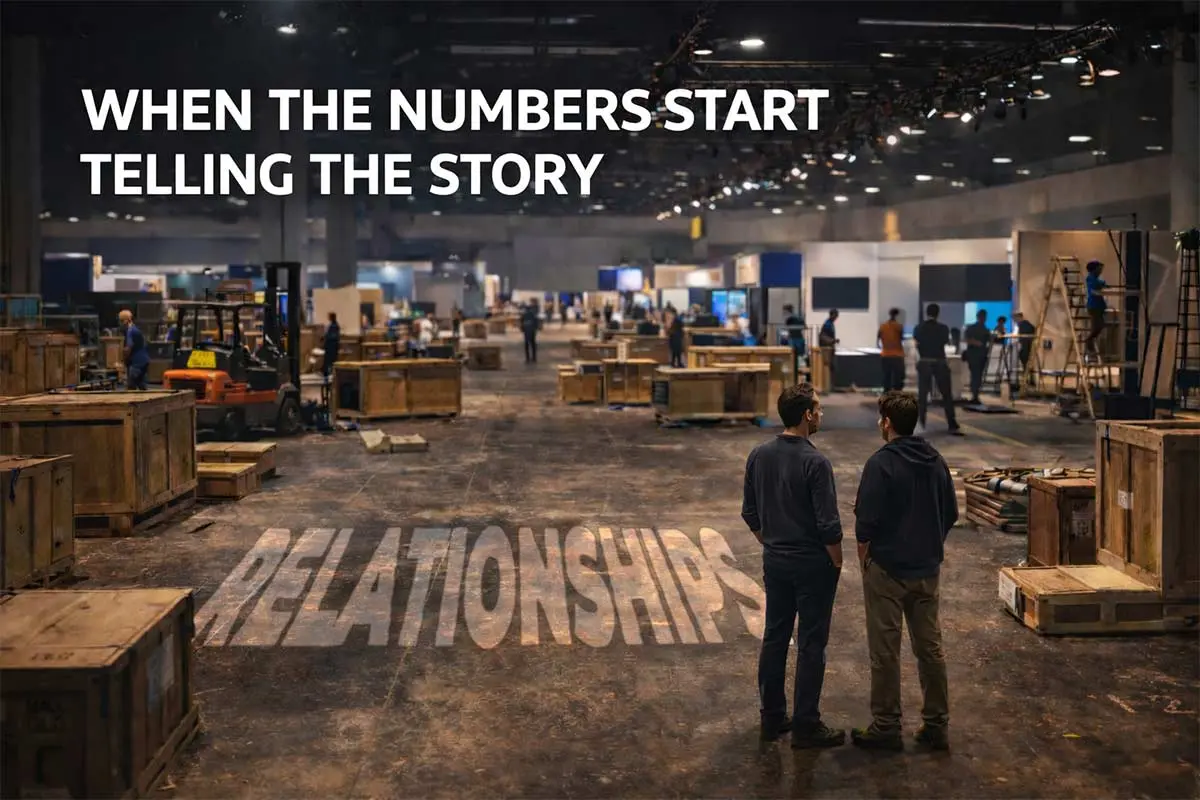
The moment when the conversation changes. When instinct and relationships are no longer enough. When the numbers start telling the story.
That’s the moment an industry crosses into a new phase.
Most industries move through this transition quietly. There’s no announcement. No clear line in the sand. It simply shows up in how companies are evaluated, how deals are structured, and how leaders start talking about their businesses.
Once it happens, there is no going back.
How Industries Grow Up
Most industries move through three stages as they mature.
Stage 1 – Entrepreneurial Era
Relationships drive growth. Instinct matters more than systems.
Hustle wins.
That’s how many industries begin. Founders and operators build businesses through relationships, reputation, and relentless effort. Decisions are often made quickly, based on experience and instinct.
There is a tremendous amount of energy in this stage, and many great companies are born here.
Stage 2 – Expansion Era
Opportunity expands. Companies grow, but systems are often behind the pace of growth.
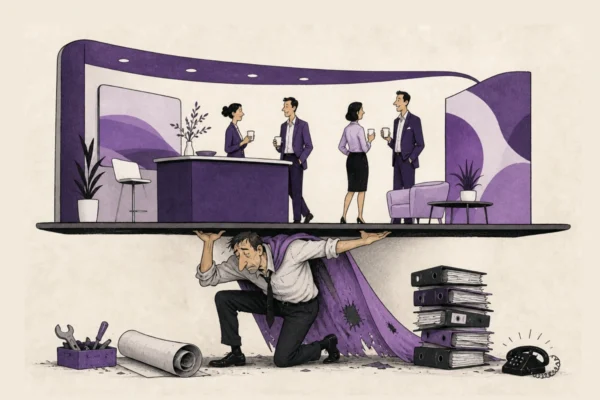
Many industries stay in this stage longer than they should. Revenue increases. Companies get larger. Teams expand. But the underlying operating discipline often struggles to keep pace with the opportunity.
From the outside, everything looks successful.
Inside the company, the same issues keep showing up in different forms, and leaders spend too much time untangling handoffs, cleaning up misses, and re-explaining expectations.
Stage 3 – Institutional Era
Capital enters. Discipline follows. The numbers start telling the story.
This is where the tradeshow industry is now moving.
Where Relationships Meet Discipline
There is a subtle power in this piece because this article is not really about private equity.
It’s about discipline arriving in an industry that historically ran on relationships.
This industry is very good at managing relationships, and it is important not to lose that, because it’s the DNA that makes this industry special. It’s the DNA that makes any business special. We must never forget that any business… any industry… is really a system of relationships.
The discipline arriving in an industry that’s built on relationships… the balance of those two things is so powerful.
Yes, this industry is entering a new stage.
You can feel it in the day-to-day realities operators are dealing with right now. Pricing pressure, labor complexity, service consistency at scale, margin compression, and the challenge of producing the same quality result across different shows, different venues, and different conditions.
When The Conversation Changed
When my partner and I built our tradeshow and event company years ago, we weren’t thinking about “creating an exit pathway.” We were trying to build a real business.
Something interesting happened once investors began paying attention. Companies started being evaluated differently.
Revenue alone wasn’t enough. Buyers wanted to understand the operating model behind it. They wanted to understand how decisions were made, how work moved through the organization, and whether results could be repeated consistently.
The conversation had shifted.
What Capital Really Reveals
There is a simple truth behind all of this. Capital doesn’t change an industry. It exposes which companies were built to last.
When investors begin evaluating companies in a space, they look for something very different than what most founder-led companies initially focus on.
They look for clarity. They look for predictability. They look for businesses that can operate consistently, not just businesses that can produce bursts of growth.
That shift in perspective changes the conversation inside companies as well.
What Changes When the Numbers Matter
When industries move into this stage, leadership has to evolve. This is where a lot of leaders get caught. What got you here is not always what will get you there.
Think differently
Instinct alone is no longer enough. Leaders need to understand how the business works. Not just what they want to happen, but what is actually happening across the operation and why results vary.
A practical way to keep it grounded is to get brutally clear on what you need to continue doing, what you need to stop doing, and what you need to start doing as expectations change.
Plan differently
Planning can’t just be activity lists. Plans must connect assumptions, resources, and outcomes. Leaders need to understand not just what they intend to do, but why they believe it will produce the results they expect.
This is where “numbers matter” becomes real. Not as reporting. As thinking.
Execute differently
Companies need operating infrastructure that produces predictable results. That means clarity around roles, decision rights, priorities, and how work actually moves through the organization.
The goal isn’t to eliminate the entrepreneurial spirit that built the business. The goal is to support that spirit with discipline.
Why This Moment Matters Right Now
This is where the tradeshow industry finds itself today.
Consolidation is happening. Capital is paying attention. The expectations for how companies operate are changing.
Quietly, but permanently.
If you’re feeling this shift, start here
Pick one place where results vary more than they should. Service consistency. Labor. Pricing. Margin. Repeatability across venues.
Define what “predictable” looks like in that one area. Not perfect. Predictable.
Then get brutally clear on three things.
- What you continue doing because it still works.
- What you stop doing because it used to work but it’s now costing you.
- What you start doing because the next phase demands it.
And don’t leave it floating.
- Decide who owns it.
- What decisions they can make.
- What numbers will tell you if it’s working.
Some companies will continue operating the way they always have. Others will recognize what’s happening and evolve.
The Next Phase
The companies that thrive in the next phase will not necessarily be the ones with the most history.
They will be the ones willing to become disciplined businesses on top of that history.
The moment the numbers start telling the story…
An industry has crossed into a new phase.