

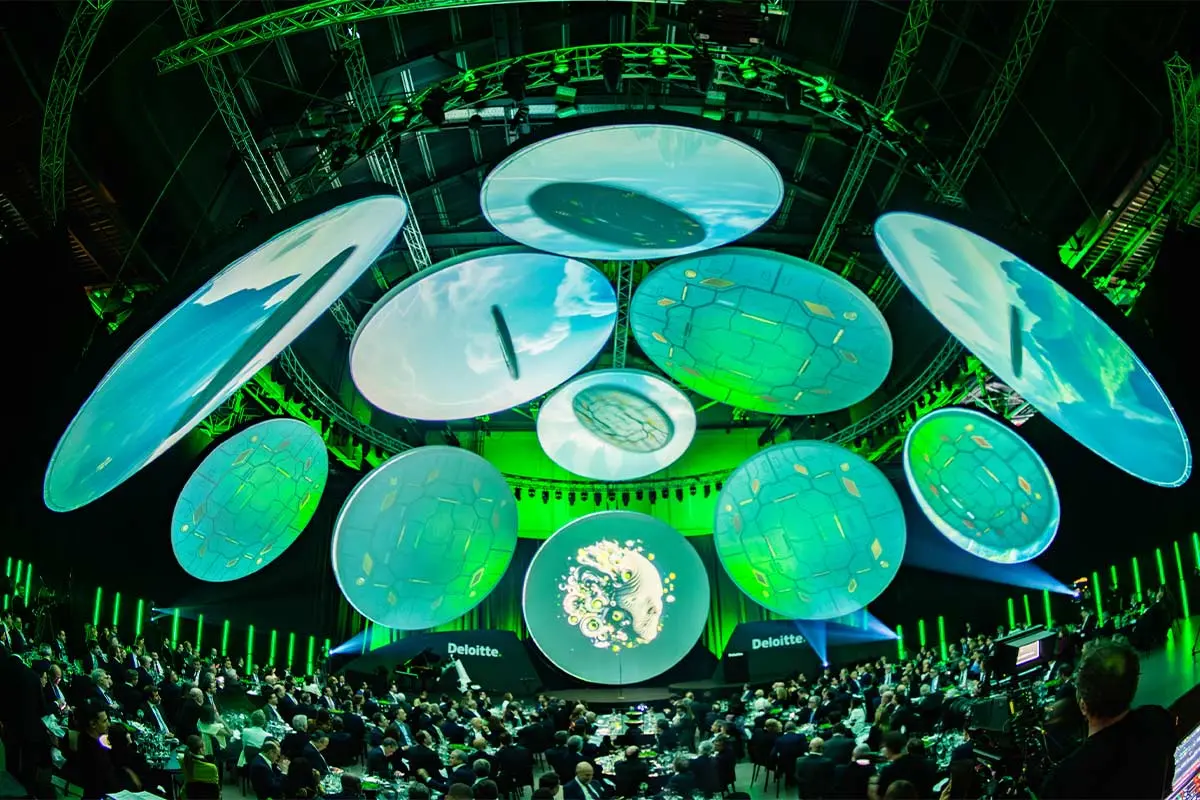


How event environments have become a powerful language of brand communication
By Pedro Magalhães, Founder and CEO of Europalco
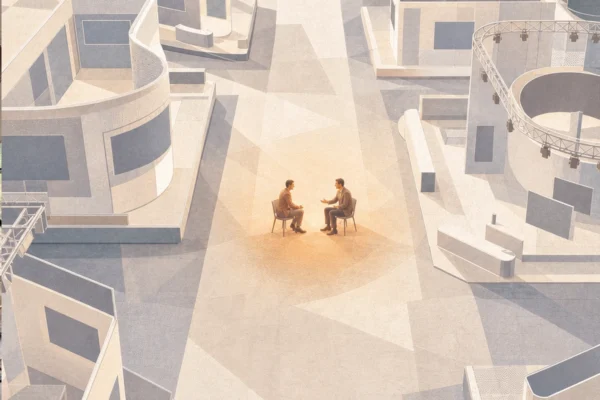
In today’s events, audiences rarely remember a specific slide or a particular sentence from a presentation. What tends to remain is the experience surrounding that moment: the atmosphere in the room, the visual energy of the stage, the rhythm created by light and sound, and the way the environment supports the story being told.
For many years, however, the way brands communicated during events followed a very different logic. The stage functioned primarily as a platform, lighting had a practical role, and screens were used mainly to display presentations. The central focus was the message itself: the keynote speech, the product announcement, or the strategic update delivered by a speaker. In that context, production operated largely in the background. If the sound was clear, the stage visible, and the presentation ran smoothly, the technical side had fulfilled its purpose. Branding was communicated mainly through content and speeches rather than through the environment in which they were delivered.
Over the past decade, audience expectations have evolved significantly. Today’s attendees arrive at corporate events after experiencing concerts where visuals transform entire venues, festivals where light and sound create immersive environments, and digital platforms that combine storytelling with sophisticated visual design. In this context, corporate events no longer compete only with other conferences or conventions; they increasingly compete with the broader experience economy. This shift has transformed the way branding is communicated. Where branding once relied primarily on information, it is now increasingly defined by experience.
There is a quote often attributed to Maya Angelou that captures this idea particularly well: “People will forget what you said, people will forget what you did, but people will never forget how you made them feel.” In the context of events, this observation is especially relevant. Attendees rarely remember the precise content of a slide or the statistics mentioned during a presentation. What remains is the atmosphere surrounding that moment: the visual environment, the energy within the space, and the emotional tone created by the design of the event itself.
Across conferences, product launches, brand experiences, and global corporate gatherings, the design of the event environment increasingly shapes how audiences perceive the brand itself. In this sense, the experience becomes an essential part of the message.
Event environments today function as narrative spaces in which stage architecture, video content, lighting design, motion elements, and digital scenography work together to support a broader story. These elements are no longer simply technical components required to make an event possible; they have become tools that help audiences understand and emotionally connect with a brand.
Technology plays a central role in this transformation, although its value lies less in spectacle than in its ability to shape narrative and emotion. Large-scale LED environments can transform a stage into multiple visual worlds within the same event, allowing the narrative of a presentation to evolve visually as the story develops. Motorized lighting systems can guide the audience’s attention, reinforce transitions between moments, and create visual rhythm within the space. Kinetic installations introduce movement and depth, turning light into a dynamic visual language, while interactive technologies such as responsive LED floors invite audiences to become part of the environment itself.
When these tools are integrated thoughtfully, technology itself becomes almost invisible. What audiences perceive is not the equipment or the engineering behind it, but the emotional atmosphere it creates. Behind these moments lies a sophisticated integration of stage engineering, audiovisual systems, lighting design, motion technologies, and digital scenography working together as a unified narrative environment.
This evolution also reflects a broader shift in how brands think about communication. In an environment saturated with information, delivering messages alone is no longer enough to capture attention. Increasingly, organizations seek to create environments where audiences can experience their identity, values, and vision in a tangible and memorable way. Events have therefore become platforms for immersive storytelling.
For companies producing large-scale events, this transformation represents more than a creative trend. It requires a different way of approaching production itself. Technology, scenography, content, and spatial design can no longer be developed independently; they must be conceived together from the earliest stages of the creative process so that every technical element contributes to a coherent narrative. Within this context, production moves far beyond its traditional technical role and sits at the intersection of creativity, engineering, and brand strategy. Decisions about stage architecture, visual environments, lighting dynamics, and technological integration influence how a brand is perceived even before a single word is spoken. A stage can communicate innovation. A dynamic visual environment can express ambition and forward thinking. An atmosphere created through light, sound, and motion can convey trust, energy, or transformation.
The evolution is therefore clear: in the past, events were designed primarily to explain the brand; today, they are designed to allow audiences to experience it. Many of the most memorable corporate events and brand experiences today reflect this shift. They are experiences in which every visual element, every transition, and every technical decision contributes to a coherent narrative that supports the brand story being told. Ultimately, what audiences carry with them is rarely just the information presented during the event. More often, it is the feeling of having been part of something meaningful.
In an environment where brands compete for attention within an increasingly crowded information landscape, that emotional connection may well be the most powerful message an event can deliver.
About Europalco
Europalco has 29 years of experience working alongside national and international clients, making Portugal the base for the most important corporate events worldwide. Its mission is to provide creative, technological, innovative, and 100% personalized solutions that ensure successful and memorable results. Focusing on their clients and event requirements, they offer the broadest global package of products and services, covering everything from exclusive furniture rental to the latest audiovisual technologies, including stages, structures, printing materials, and much more. With facilities in Lisbon, Porto, and Algarve, Europalco continues to grow and strengthen its position in the industry. A key part of their strategy is the creation of the Empowerment Ecosystem, which fosters the largest audiovisual companies in Portugal. Visit europalco.pt/en/