

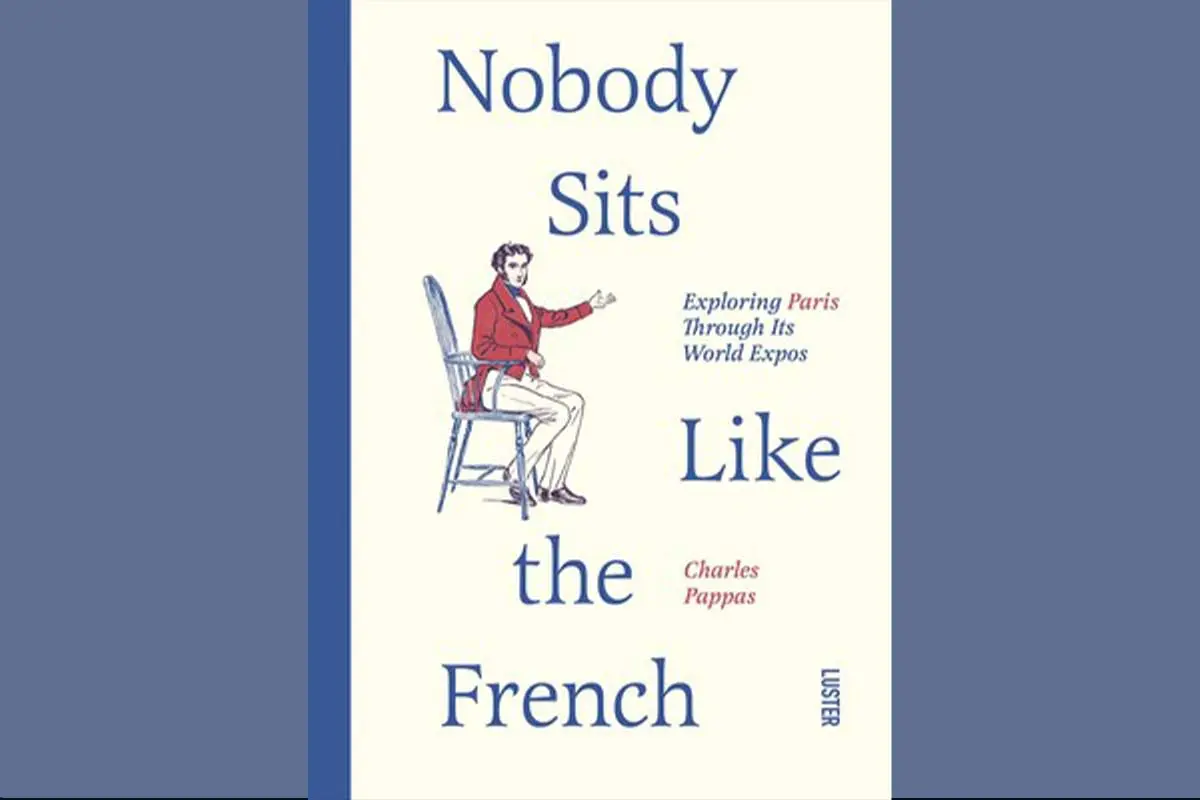


Paris does not need another admirer. What it benefits from here is an explanation. In Nobody Sits Like the French: Exploring Paris Through Its World Expos, Charles Pappas argues that the city most often praised for its beauty is better understood through the seven Universal Expositions that reshaped it between 1855 and 1937.
A City Built for Showing Off
Pappas situates Paris’s expos within the larger history of world fairs, beginning with London’s Great Exhibition of 1851 and moving through an era when innovation, nationalism, and spectacle collided. These events introduced new technologies, products, and ideas on an astonishing scale. Millions attended. Entire neighborhoods were rerouted. Infrastructure was built not just to impress visitors, but to endure after they left.
A longtime journalist covering the tradeshow industry for Exhibitor magazine, Pappas approaches these expos less as cultural curiosities than as working systems designed to influence behavior, taste, and adoption. That perspective shapes the book’s focus. The familiar landmarks are here, including the Eiffel Tower, the Grand Palais, and the Petit Palais. More revealing, though, are the quieter legacies: sewer systems, café culture, luggage design, and furniture that still fills Parisian streets.
Read this way, Paris begins to resemble the ultimate permanent exhibit, still performing lessons first staged for a paying audience.
Nobody Sits Like the French
The book’s title refers to the bistro chair, a bentwood design that won a gold medal at the 1867 Exposition Universelle and went on to become the world’s first mass-produced piece of furniture. Pappas uses it as a symbol of how expo-stage novelty becomes everyday habit. By 1930, more than 50 million had been sold, and the chair remains a fixture of French café life.
This attention to ordinary objects is one of the book’s strongest moves. Pappas is less interested in monuments than in how innovation filters down into daily experience. The expos matter not because they dazzled in the moment, but because they quietly rewired how people lived afterward.
Follow Your Nose
Pappas’s writing leans heavily into the senses. Smell, in particular, becomes a recurring guide. The pungency of Roquefort cheese, the unmistakable odor of the Paris sewers, and the physical realities of nineteenth-century infrastructure anchor the history in lived experience. Readers do not just learn what changed, but what it felt like when it did.
One of the book’s most memorable sections describes the massive wooden balls once rolled through Paris’s sewers to clear blockages using water pressure alone. That these sewer balls were exhibited alongside marvels like Thomas Edison’s phonograph neatly captures the expos’ ability to elevate the practical to the spectacular, and to treat infrastructure as public theater.
High Art, Low Jokes, and Everything Between
The book’s tone is confident and controlled. Pappas uses cheeky humor, but sparingly. Wordplay appears in chapter titles and asides, signaling approachability without undercutting the scholarship. He is equally comfortable discussing Paul Gauguin’s rejection by expo juries and slipping in pop culture comparisons that bridge centuries.
Still Sitting
By the end, Nobody Sits Like the French has made its case. Paris is not just a museum of great buildings, but a city shaped by exhibitions designed to dazzle, persuade, and endure. Pappas proves that nobody sits like the French. Along the way, he also demonstrates that nobody quite writes about expos the way he does.