



The Javits Center’s sustainability story began with a problem that was hard to miss: birds were striking the convention center’s reflective glass.
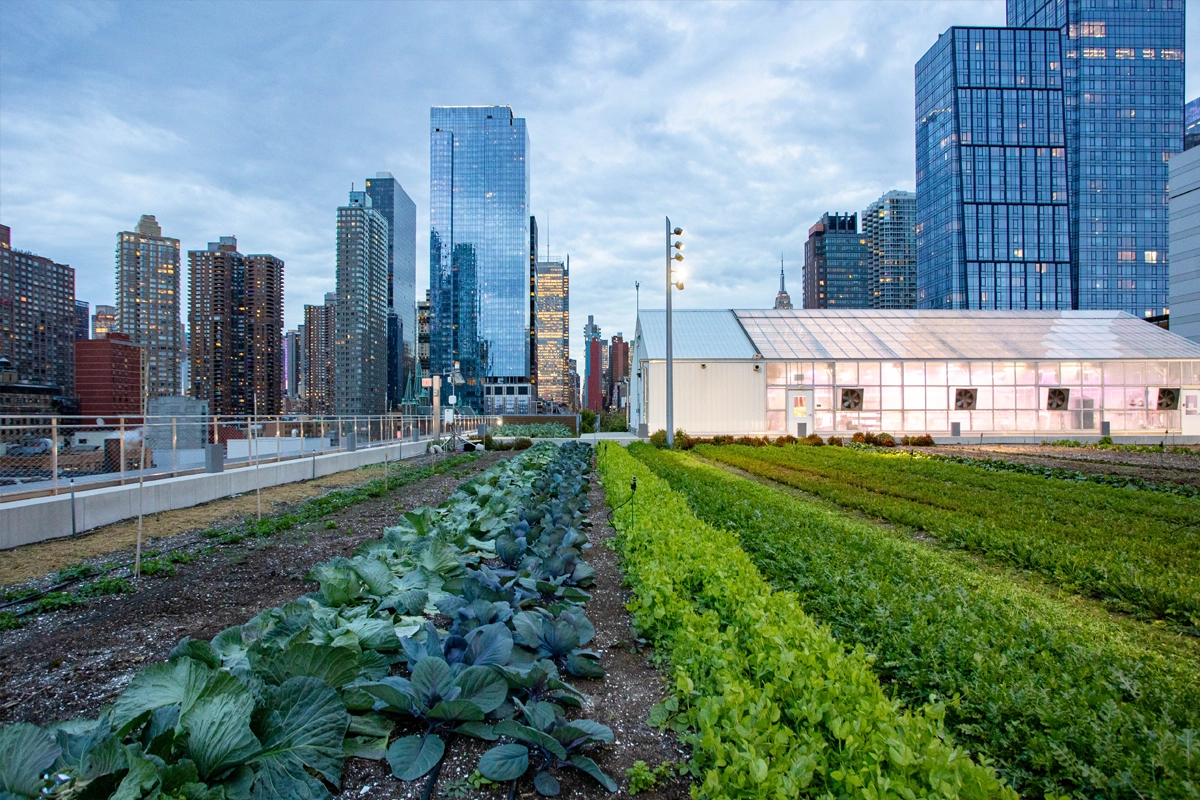
During a major renovation completed in 2014, the Manhattan venue installed more than 6,000 bird-friendly glass panels and a 6.75-acre green roof. When Exhibit City News (ECN) reported on Javits’ first Sustainability Report in 2017, the center was already measuring bird populations, stormwater retention, energy use, and building performance.
Nearly a decade later, the work extends from the roof to the loading dock.
As Javits marks its 40th anniversary in 2026, sustainability has become part of how the venue manages energy, freight, exhibitor materials, building systems, and its relationship with the surrounding community. The scale is substantial. According to the center, Javits supported more than 3,000 jobs on campus, generated more than $1 billion in economic impact, and contributed more than 100,000 hotel room nights in 2025.
For Yashi Dadhich, senior director of energy and sustainability at the Javits Center, that evolution still traces back to the biodiversity work. Dadhich oversees the center’s energy and sustainability program, including waste management and sustainability reporting.
“If I had to talk about one, I would point to our biodiversity work because it marked the beginning of our sustainability journey and changed how we operate and view our role in the community,” Dadhich said.
From environmental project to operating strategy
Javits sits along the Hudson River within a major migratory bird pathway. According to Dadhich, replacing the original reflective glass and creating the green roof did more than reduce the building’s environmental impact.
Researchers began documenting biodiversity on the roof, and the results changed how Javits viewed its role beyond generating economic activity.
“Biodiversity became a valuable asset and encouraged us to look inward at every operation and ask how each department could make better, more sustainable decisions,” Dadhich said.
That approach increasingly tied environmental goals to building performance.
Javits says its green roof, energy-efficient lighting, heating, ventilation, and air conditioning upgrades, and other improvements have made the building approximately 26 percent more energy efficient. The green roof absorbs approximately seven million gallons of stormwater annually and has helped reduce the surrounding neighborhood’s temperature by 1.8 degrees Fahrenheit.
More than 2,000 solar panels can generate up to 10 percent of the building’s power. Javits also operates a 13-megawatt microgrid as its central power hub and has added battery energy storage to its energy strategy.
Some investments were driven as much by resilience as sustainability. After Hurricane Sandy exposed infrastructure vulnerabilities in 2012, Javits moved critical systems, including servers, to Level 4.
“One of our most important investments has been in research,” Dadhich said. “That research allows us to measure the results, understand how these systems work together and demonstrate their long-term operational, environmental and financial value.”

The sustainability problem after move-out
For tradeshow organizers and exhibitors, one of the most visible challenges begins when an event ends.
Displays, furniture, appliances, and other materials may remain usable, but returning them can cost more than leaving them behind. JavitsCares attempts to capture those materials before they enter the waste stream.
During move-out, teams identify usable items and move them from the show floor to donation storage. The sustainability team then works with local organizations to match the materials with recipients.
Exhibitors who know beforehand that they will leave materials can label them for donation with stickers provided by Javits. That advance notice helps cleaning and operations teams separate donations during the compressed move-out process.
The variety of material makes the process more complicated than simply setting aside unwanted booth components.
“A single event may leave behind everything from coffee machines to gaming kiosks, and each item requires the right recipient, storage space and transportation,” Dadhich said.
ECN reported that JavitsCares donated more than 145 tons of materials in 2024. Dadhich said the program redirected 159 tons from the waste stream in 2025.
The increase reflects a program that depends heavily on coordination among show management, exhibitors, Javits teams, and community organizations.
Freight becomes part of the equation
The connection between sustainability and event operations becomes even clearer downstairs.
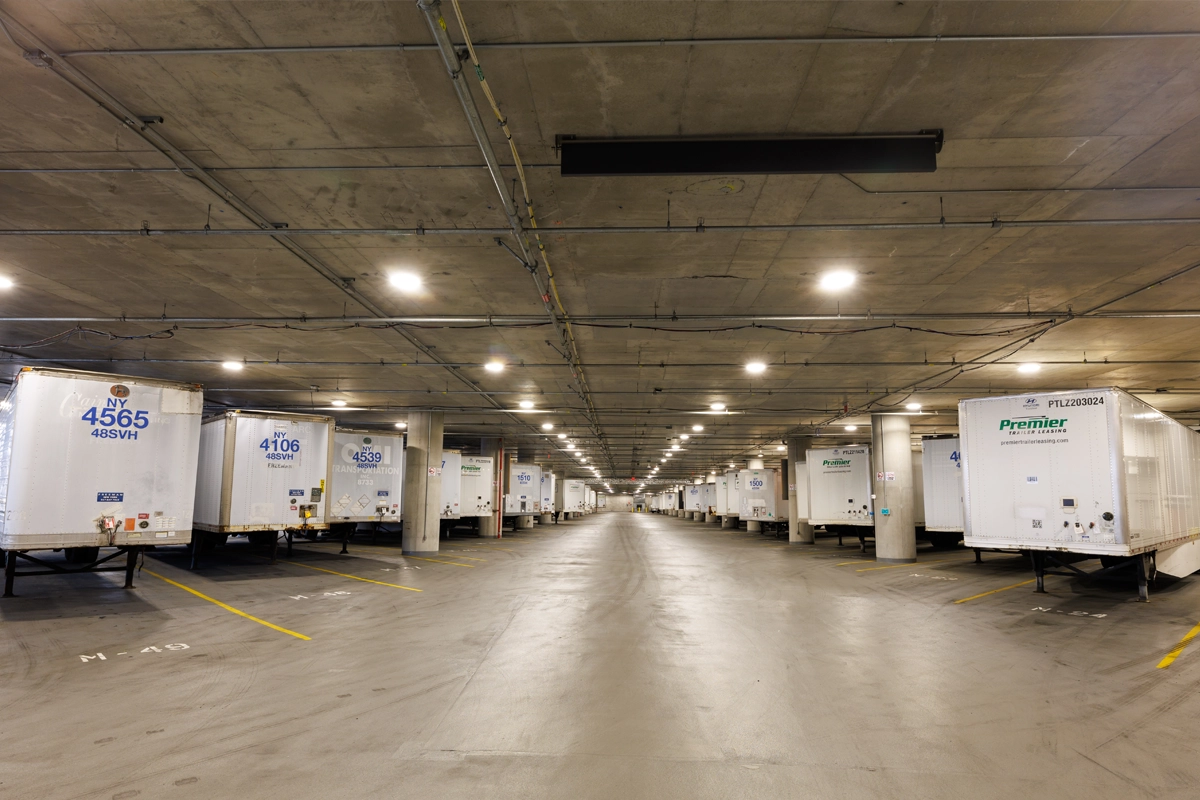
Javits added a four-story Truck Marshalling Building as part of its 2021 expansion. The facility can accommodate up to 200 trucks onsite, changing how freight moves through the campus during show move-in and move-out.
Previously, Dadhich said, trucks often could not remain in the area after making deliveries. Some traveled back to New Jersey or other locations away from the campus, then returned when it was time to pick up materials.
That meant additional costs for exhibitors as well as empty truck miles, fuel use, and traffic.
Now, Javits can stage trucks onsite and coordinate freight over time. The system reduces unnecessary travel while giving operations teams greater control over freight flow.
“The Truck Marshalling Building is a strong example of Javits Center solving several problems at once,” Dadhich said.
For exhibitors, contractors, and labor teams, that can mean a smoother move-in and move-out. For the surrounding neighborhood, it means fewer trucks circulating or waiting on nearby streets.
What other venues can actually use
Not every convention center can replicate Javits’ solar array, battery storage, green roof, or four-story truck facility. Dadhich said venues should instead examine how energy, materials, freight, and waste move through their own buildings and identify opportunities that fit their operations.
Some changes require far less infrastructure. Earlier communication with exhibitors can improve material recovery, while partnerships with community organizations can create outlets for reusable show materials. Building automation can also reduce energy use by limiting heating or cooling in unoccupied spaces.
Dadhich singled out building automation for its potential long-term operational, environmental, and financial benefits.
“The key is not to copy another venue’s program exactly, but to identify the opportunities that make the most sense for your own building and community,” she said.
That approach represents a notable progression from where Javits stood when ECN examined its sustainability program in 2017. The green roof and bird-friendly glass remain part of the story, but the same thinking now reaches energy management, freight logistics, exhibitor move-out, material recovery, and daily building operations.
For an industry accustomed to judging sustainability by what gets recycled after a show, Javits offers a broader question: What changes when a venue begins looking for environmental and operational gains in the same places?
The Jacob K. Javits Convention Center opened in 1986 on Manhattan’s West Side and is operated by the New York Convention Center Operating Corporation. The six-block campus hosts conventions, tradeshows, and special events while operating sustainability, biodiversity, energy, and community programs. For more information, visit javitscenter.com.
Related stories