


“Excuse me, where can I get a Band-Aid?”
Is your event team ready to answer this question? What if a guest has an allergic reaction, a twisted ankle, or a heart attack?
So much effort goes into making our events amazing experiences for participants, and rightly so. The last thing we want is a medical issue to derail their experience.
Surprisingly, event medical planning is missing from many planner checklists entirely. If a checklist mentions safety, it’s usually in the context of crowd control and venue access, not what happens if a guest has a physical ailment.
Why an Event Medicine Plan Is Important
Event medical planning is related to safety—it assesses risk and deploys resources wisely to minimize disruption. Safety looks at folks getting in and out. Event medicine takes care of them while they’re at the event.
There are three reasons that creating a medical plan for your tradeshow, no matter the size, is important.
- Participant health. A strong medical plan’s first goal is to quickly diagnose a patient and take necessary action to resolve the medical issue.
That may be as easy as giving someone Band-Aids or aspirin. It may be as complicated as CPR and an ambulance ride.
For show builds or teardown, medical planning can ensure proper care of the team member and retain the team’s ability to meet deadlines.
- Managing attention. Taking quick action with the proper resources means that small issues stay small. Larger issues can often be handled discreetly and quickly. In both cases, the disruption to the event is small and contained, while the patient gets the best care possible.
Without a good plan, medical issues can become the center of attention. For example, a formal dinner stops because of an attendee’s allergic reaction. Nobody knows what to do while the attendee’s face swells or their breathing gets raspy. The longer that nobody takes action, the worse it gets. Eventually, action is taken and the episode ends, but there’s an impact on the event.
Instead of a reputation for quick action and participant care, the event may become “the one with the allergies,” which can impact the willingness for participants to return.
- Compliance and legal. Some jurisdictions may have specific medical staffing requirements for large events. Your venue should have information on this, and a check with the host city isn’t a bad idea. Even if the event goes perfectly, you don’t want a fine for noncompliance.
And just as individuals sue for slip-and-fall accidents in hotels, they may also attempt to sue if there is a medical incident. A plan, and the prompt attention received through the plan, may be one item in your defense.
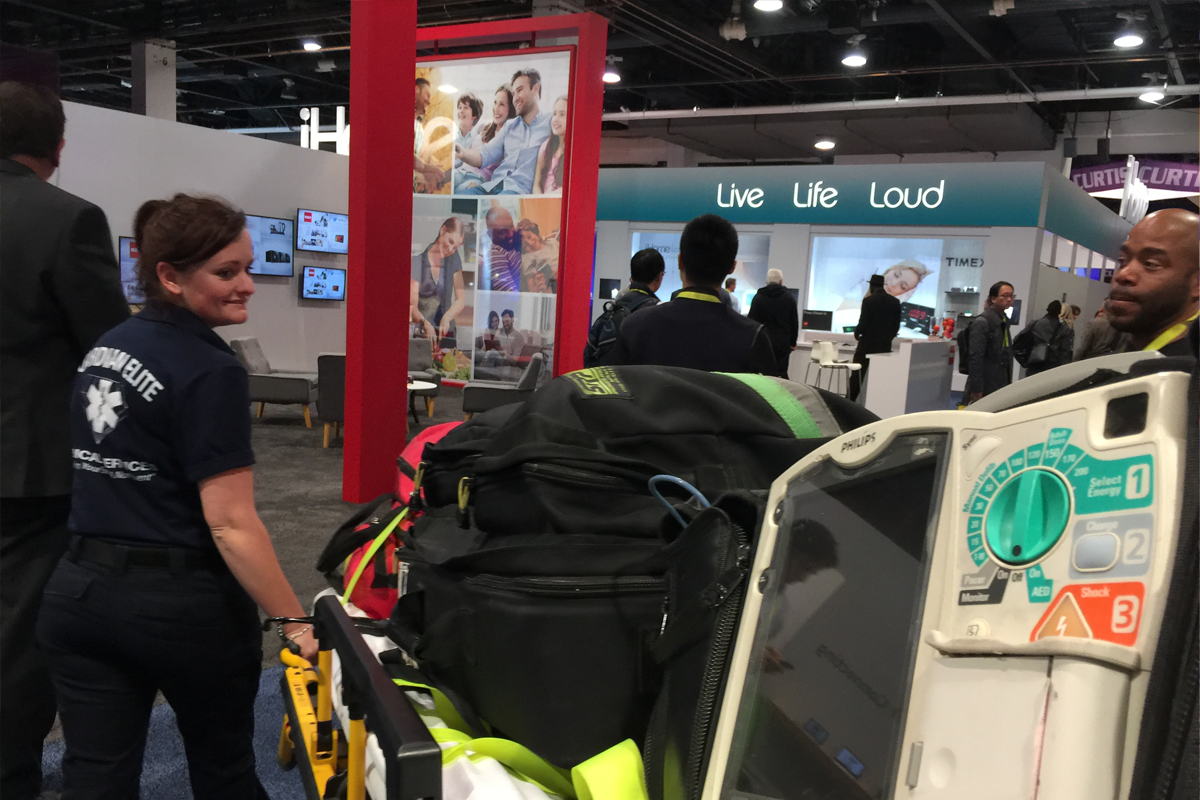
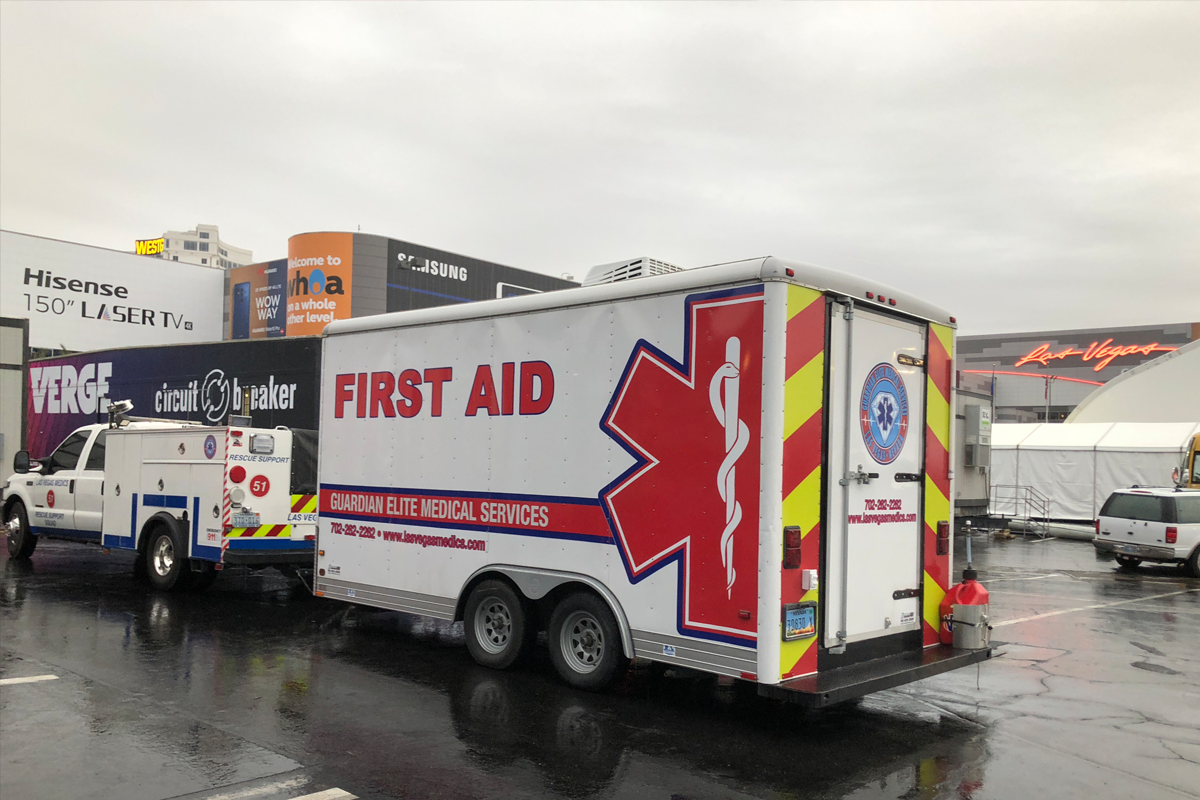
“Every event should have a plan to deal with a life-threatening emergency. Planners should discuss event medical support with their venues just as you would catering or lighting,” says Sam Scheller, CEO of Guardian Elite Medical Services, an event medicine company in Las Vegas that supports tradeshows like CES.
Starting the Conversation
Popular venues often already have plans or event medicine partners they work with to create or adapt a plan for your event.
At a minimum, event producers should have at least two designated medical and safety contacts.
These folks should be able to communicate with participants and route them to medical resources as necessary as well as contact the venue and/or medical teams. In essence, these team members should know where the first-aid kit or automated external defibrillator (AED) is, who to ask for it, and who to contact when the first-aid kit isn’t enough.
Event producers should also clarify how to best access emergency services. Some venues may offer on-site emergency medical personnel. Instead of calling 911, you may be able to radio for emergency medical services (EMS). On-site medical support means faster reaction times and a team that knows exactly where Ballroom 7 is.
Walk through the process with your venue, whether resources are on-site or not. If you call 911, does the venue also want to know so that they can help direct first responders? If you’re working with an on-site team, can you call by phone or contact by radio? Double-check contact numbers and/or radio channels to ensure that messages get to the right people at the right time.
The larger a show is, the more detailed the medical planning will be. A show with 10,000 attendees will have different staffing levels than a show with 50,000 attendees. A show held in one exhibit hall will need fewer transportation options than a show that covers three halls.
Proper Planning Prevents Poor Performance
Everyone is responsible for their own health and safety. But as planners, venues, and show organizers, we want our participants to enjoy the event and come back for the next one.
We do not want the event that we’ve worked so hard to create to be overshadowed by a medical episode. If a medical issue happens, we want the participant to get the care they need as quickly and discreetly as possible. Planning for the worst means that should something happen, both the participant and the event come out of it well.
Related stories
TIPMed’s uSummit Aims to Improve Pharmaceutical Congress Planning