



When I step into exhibit halls, I always used to love to walk each aisle, make note of what looks interesting, and plan the ones I want to come back to.
But the reality of today’s time-crunched attendee in an exhibit hall is much more surgical.
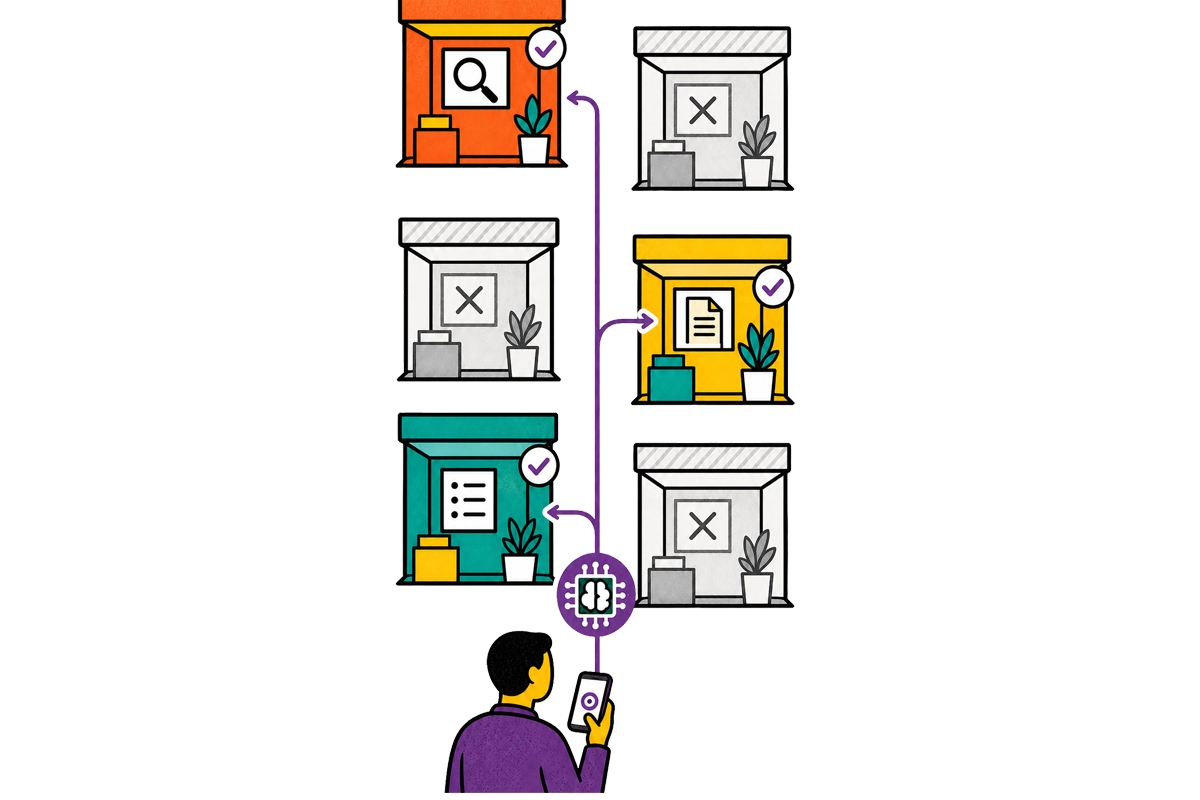
They open ChatGPT or Claude, paste in the exhibitor list and floor plan, and type something like: “I’m sourcing a SaaS platform for enterprise-level receipt manager to replace Concur. Given this exhibitor list, which ten booths are worth walking, and what should I ask each one?”
The bot answers. It reads companies that it can match to something, and it pulls whatever’s public (press mentions, LinkedIn posts, old show recaps), and it builds a shortlist.
It skips every exhibitor it can’t find anything about…And nobody’s opening the app to double-check it before they walk the floor.
For years, “getting found” on a show floor meant a good booth location, a giant hanging sign, and a floor plan in the show app and maybe a push notification purchased with the sponsorship package. Much of that might still matter once someone’s standing in the aisle, but with fewer app installs, your push notification goes to no one, and your booth location doesn’t really matter at all.
The bot extracts facts from the web: what does this company make, who has said something credible about them, is there evidence real buyers got real value. That’s a new kind of show-floor traffic problem, and it has nothing to do with booth size.
The exhibitors best positioned for this aren’t necessarily the ones with the biggest presence, now they’re the ones with the most complete public profile. This is beyond SEO, though. What’s written about the booth, the product line, the team, online, is what the research agents are reading.
That means treating a few unglamorous things as strategic, not as throw away tasks that don’t matter: keeping an exhibitor directory profile current and specific instead of boilerplate, publishing case studies and specs where they can be indexed, making sure press mentions and show recaps exist somewhere findable, and writing booth and product descriptions like they’re being read by someone (or something) that has never heard of you.
Floor plans and exhibitor directories have mostly been treated as operational necessities, something attendees consult once they’re already on-site, something insurance and fire marshals require, something a show app displays. But they’re becoming something else: training material for the AI tool that a growing share of attendees are using to plan their visit before they arrive.
That changes what “complete” means for a directory listing or an exhibitor profile. It also raises the stakes on documentation that used to be an afterthought.
None of this replaces what Install and Dismantle (I&D) teams and builders do best: the physical craft of getting a booth built, installed, and struck on schedule. But the exhibitors who show up well built and well documented are the ones whose booths will end up on somebody’s shortlist.
If someone ran your exhibitor profile and your booth’s public documentation through an AI agent and asked “should this exhibitor be on my list?” what would it say back, and would it even have enough to answer?
This story originally appeared in the Q4 2025 issue of Exhibit City News, p. 28. For original layout, see Print Version