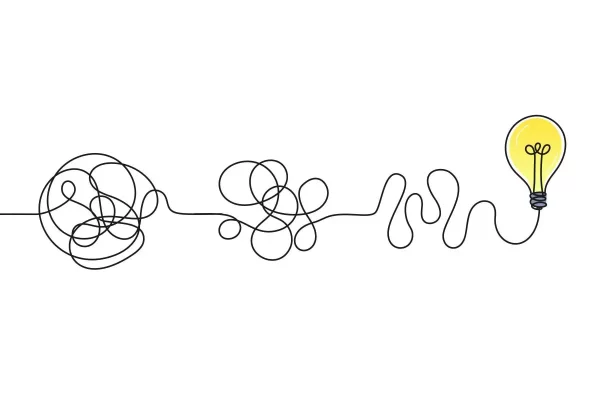





We need to drive more engagement at our booth this time.” We’ve all heard that from our client or our internal leadership team but what does that even mean? Booth traffic? Badge scans? Conversations? Or the deep and meaningful combination of getting attendees to think, act, and feel differently after interacting with your brand?
To get rave reviews from the powers that be, you first have to figure out how they are measuring success so you can design to their desired outcomes.
I like to explain to them that we can craft and measure three types of engagement: Cognitive, Behavioral, and Emotional.
Cognitive Engagement: Make Them Think or Help Them Learn
This is how you engage attendees’ minds by sparking curiosity, challenging assumptions, and delivering insights that shift their perspective. These are the sessions that help them learn something about their problem, your solution, or something to help them be better at their job.
People remember what makes them think, not just what they see. By teaching an attendee something, your brand is established as a trusted expert rather than just another vendor.
When you give attendees an intellectual reason to come back and engage further or send others your way to learn what you’ve taught them, you know you’ve made an impact.
Three ways to bring this to life in your booth:
Turn your booth into a learning hub by hosting interactive knowledge sessions instead of passive product pitches.
Present industry insights in a way that matters to attendees, is relevant to their daily job, and is shareable for them to look like the smart one who found it.
Facilitate “Aha!” moments by posing big questions, offering fresh perspectives, and providing hands-on opportunities to explore solutions.
What if, instead of a standard product demo, you invited attendees to participate in an industry challenge? They could predict trends, test new ideas, or compare solutions in a way that makes them think differently about their problems and then share that publicly.
Behavioral Engagement: Get them to Do something
Get attendees to take action by physically interacting with your space, participate in activities, and engage with your brand beyond passive observation. This is core to gaining an “engaged” attendee.
Active participation creates stronger memory recall than passive consumption, and movement and interaction increase attention span and retention. Paired with your cognitive engagement initiatives, “doing” reinforces learning; attendees internalize your message through experience.
Behavioral engagement might mean:
Building an experience by letting attendees test-drive products, participate in real-world applications, or co-create something using your products.
Gamifying the engagement: leaderboards, challenges, and interactive tech keep attendees involved and give them a way to actively move through the experience in a structured way.
What if instead of a sales-led demo, you set up a real-world use case where attendees can test the product themselves and try to solve a problem that they might experience in their own business? Having them complete a task or challenge shows the value of your solution in action.
Emotional Engagement: Make Them Feel Something
A couple of goals here—one is to create a personal connection with your brand that sticks long after the show ends, but the more important one is creating an environment that fosters the desire to do business together.
You know the old saying: attendees won’t remember what you said; they’ll remember how you made them feel? It’s true. Emotionally engaging activities build brand affinity and trust, which means that people buy from brands that align with their values.
Experiences that evoke joy, excitement, surprise, or nostalgia create a lasting impact.
Emotional engagement might mean:
Creating something called “prosocial effervescence”—an experience that can be shared simultaneously with a group of people, connecting them through moments of personal impact.
Using storytelling, not selling, to share real customer success stories that attendees can relate to.
Designing unexpected, personalized interactions that leave a lasting impression.
What if instead of handing out generic swag, you created a custom gifting experience where attendees chose a meaningful item based on their interests? Then you add a personal note or a tailored recommendation based on their conversation with your team?
How to Apply This to Your Next Exhibit
Tradeshows are high-investment opportunities, and success isn’t measured by how many people walked by your booth. It’s measured by how many left truly engaged, and then took action.
Cognitive Engagement makes them think.
Behavioral Engagement makes them act.
Emotional Engagement makes them care.
When all three come together, you create an experience they won’t forget… Most importantly, they’ll answer the phone when your sales rep calls.
This story originally appeared in the Q2 2025 issue of Exhibit City News, p. 42. For original layout, visit https://issuu.com/exhibitcitynews/docs/exhibit_city_news_-_apr_may_jun_2025/42.