

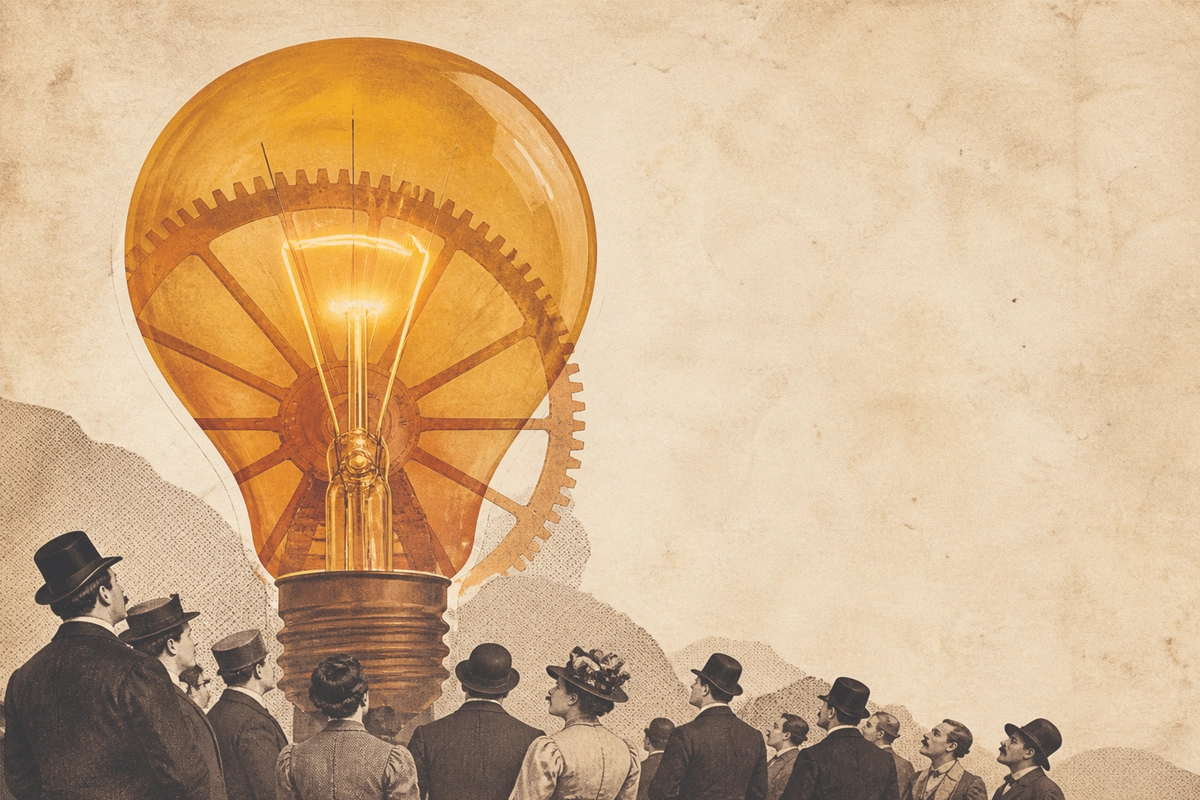


Somewhere in America, there is a family photo you have never seen.
It may be faded, wrinkled, or almost pristine in an album. Whatever its condition, it is a memory of the past. The picture was taken on a summer afternoon. The exact year doesn’t matter because the photograph exists in a hundred versions, taken across a hundred years, in a dozen cities, at a dozen different fairs. In it, a family stands in their Sunday best in front of something enormous: a steel globe, a glittering tower, or, perhaps, a giant wheel turning against the summer sky. They are squinting into the light. They are smiling the way you do when something amazing has happened and you’re just not sure how to contain the feeling.
Behind them, the future is on display. It has been there all day. Tomorrow, the family will board a train or a bus or climb into a car and go back to their normal lives, to the farm in Kansas, the tenement in Brooklyn, or the ranch house in the suburbs, and they will spend the rest of their lives trying to describe what they saw to people who weren’t there.
It started at a world’s fair. Almost everything started at a world’s fair.
Every brand you recognize. Every highway you drive. Every theme park you visit. Every skyscraper you see. Somewhere in their history is a world’s fair.
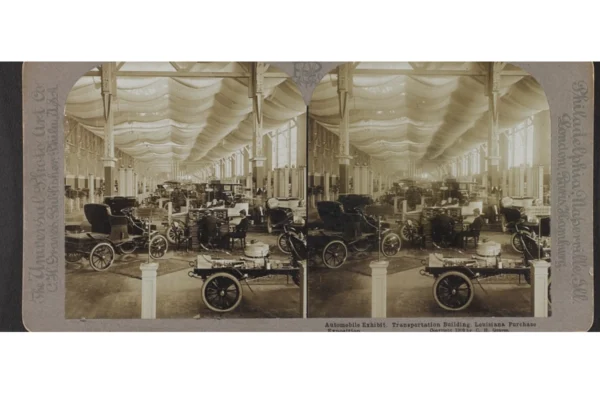
That’s not a metaphor. It’s a fact. Telephones. Elevators. Electric lights. Automobiles. Televisions. Color photographs. Nylon stockings. The interstate highway system. Commercial aviation. The computer as something ordinary people might buy. The products that fill our shelves, our driveways, and our lives today, most of them have origin stories that start at a world’s fair.
The Original Experiential Marketing
Brands arrived in the public imagination not through a press release or a newspaper ad, but through something far more powerful: a live demonstration before an astonished crowd. These were moments when an entire nation looked at an object it had never seen and instinctively knew something was different. They may not have realized it at the time, but their world was about to change.
Madison Avenue would eventually call it experiential marketing: “an advertising strategy that invites consumers to interact directly with a brand through immersive, hands-on experiences.” Many credit Bernd Schmitt, a professor at Columbia Business School, with coining the phrase in 1999.
The people who exhibited at world fairs mastered this concept more than a century earlier. They knew that a person who tastes something, sees something, or stands inside something is not a passive recipient of a message, but a participant in its creation. Their memory is not a memory of an advertisement; it is a memory of an experience. And experiences last.
Temporary Cities, Lasting Legacies
The fairs did more than showcase experiences and create memories. They created hundreds of thousands of jobs. They helped build sections of cities where people now live, work, and play. Many public spaces that define American cities today began as fairgrounds. They were temporary cities, dressed up as parties, that became permanent investments in the future. These places include portions of Chicago’s lakefront, San Francisco’s Marina District, Seattle Center and the Space Needle, San Diego’s Balboa Park, New Orleans’ Riverwalk and Warehouse District, and New York’s Flushing Meadows.
A total of 320 million people attended 30 world’s fairs in the United States between 1853 and 1984. They came from different states, different countries, and different walks of life. They wore their Sunday best and waited in long lines and ate things they’d never tasted. They saw things they’d never imagined and went home changed in ways they couldn’t always describe. Memories of products and brand names traveled home with them.
World’s fairs helped transform industrial expositions into large-scale, industry-specific tradeshows. They promoted a certain image of the United States to both its citizens and other countries. They presented entertainment and products and gave birth to experiential marketing.
This story originally appeared in the Q4 2025 issue of Exhibit City News, p. 24. For original layout, see Print Version