



by stevensE3
In the exhibit industry, there is one reality every exhibit manager understands: the show opens when the show opens. Ready or not.
The date does not move because a shipment was delayed. The hall does not wait because a graphic changed late. Attendees do not pause at the entrance because a supplier underestimated the install. When the doors open, the brand environment has to be ready.
For exhibit managers and marketing teams, that pressure is familiar. A tradeshow program may take months to plan, but its success is often judged in a matter of days. The exhibit must attract attention, support conversations, reflect the brand, manage traffic, showcase solutions and withstand the realities of the show floor. Behind the finished space is a complex chain of decisions, details, deadlines and people.
For stevensE3, that reality has shaped a century of helping brands prepare for moments that cannot be missed, with the preparation, craftsmanship and follow-through those moments demand.
“Being part of a company with a century of experience gives you a long view of what really matters in this business,” says Cam Stevens, 3rd Generation President of stevensE3. “The work is about much more than building an exhibit. It is about giving clients confidence that when the doors open, their brand will be represented the way it should be.”
Founded in 1927, stevensE3 has seen the exhibit industry evolve from traditional display construction to highly strategic brand environments. Materials, technology, logistics, regulations, client expectations and audience behaviour have all changed. What has not changed is the need for clients to have confidence that their exhibit partner will be ready when the doors open.
That confidence is not created at the end of a project. It is built much earlier.
It begins with understanding what the exhibit needs to accomplish. Who is the audience? How will people enter and move through the space? What conversations need to happen? What products, services or ideas need to be explained? What does success look like for the client once the show is over?
“Exhibit managers are balancing a lot before they ever get to the show site,” says Rebecca Thompson, Director, US Sales at stevensE3. “Budgets, approvals, timelines, internal expectations and the pressure of the event itself all require management. Our job is to make that process clearer, more manageable and more successful.”
A SUCCESSFUL EXHIBIT IS RARELY JUST ABOUT HOW IT LOOKS.
IT IS ABOUT HOW WELL IT WORKS
Every decision carries both a creative and practical consequence. A dramatic feature may support brand impact, but it must also ship, install, meet regulations and perform in a crowded environment. A modular system may create efficiencies, but it still needs to feel intentional and aligned with the brand. A strong rendering may win approval, but the final environment must stand up to freight, labour, timing, venue rules and repeated use.
THAT IS WHERE TRUST BECOMES MORE THAN A WORD
In the exhibit business, trust is operational. It shows up in accurate estimating, clear communication, organized production, reliable logistics, skilled installation and the ability to solve problems without creating drama for the client. It shows up when the team understands that the show floor is not the place for surprises.
Much of that value is invisible to attendees. Visitors see the finished experience: the graphics, architecture, lighting, products, meeting areas, demonstrations and hospitality. They do not see the planning meetings, production schedules, engineering reviews, inventory checks, graphic proofs, shipping coordination, show services forms and last-minute adjustments that made it possible. Exhibit managers do.
They know that a good partner is not simply a vendor who can build what is drawn. A good partner understands the stakes. A good partner anticipates friction before it becomes a problem. A good partner can balance budget, schedule, design intent and show-site conditions while keeping the brand objective in focus.
“A successful show does not happen because of one person or one department,” says Mike Hughes, Operations Manager at stevensE3. “It happens when design, production, logistics and installation are all working from the same plan, with the same understanding of what the client needs.”
That balance has become more important as exhibits have evolved into broader brand experiences.
Today’s tradeshow environments often need to do more than display products. They may support recruitment, education, thought leadership, hospitality, investor confidence, dealer relationships, product launches, media engagement or community outreach. The booth is no longer just a structure. It is a temporary but important expression of the brand.
Craftsmanship remains central to that process. Not craftsmanship as nostalgia, but craftsmanship as discipline. It is the habit of caring how something is made, how it functions, how it feels in person and how it reflects the client’s standards. In a temporary environment, quality still matters because the experience is physical. People walk through it, lean on it, gather in it, photograph it and form impressions from it.
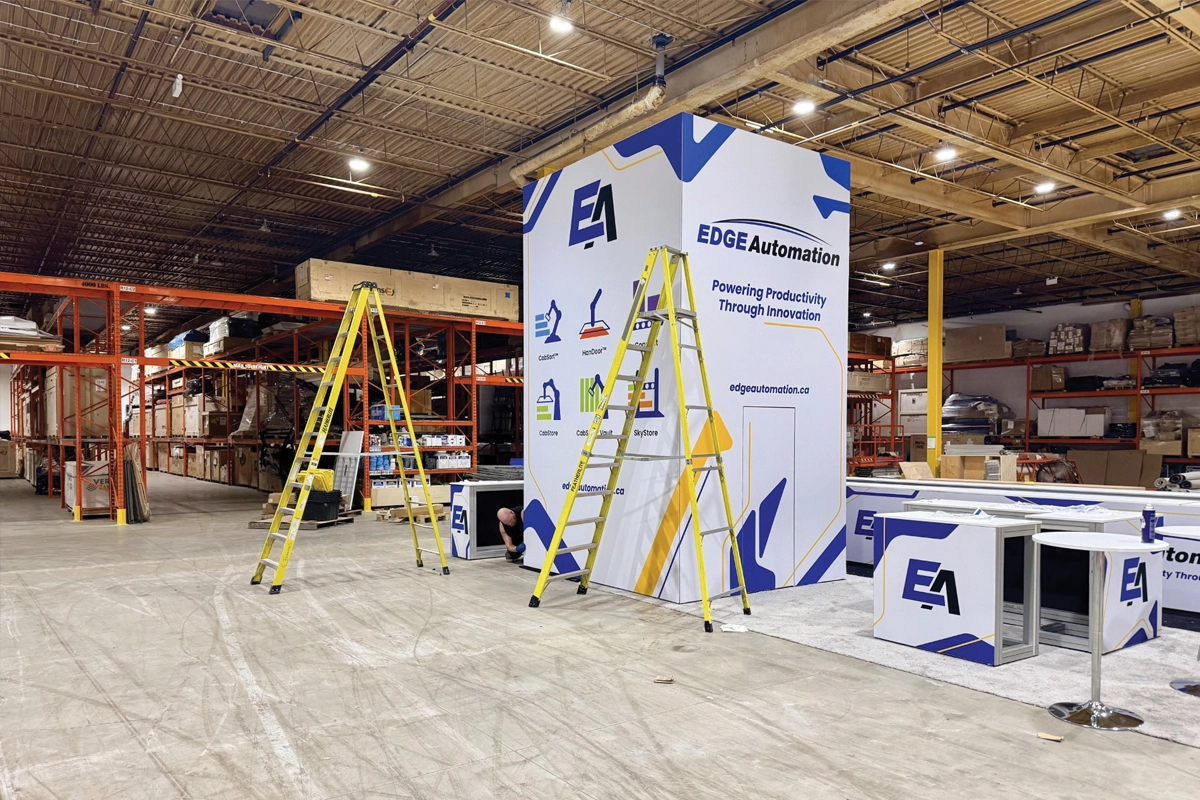
THE DETAILS MAY NOT ALWAYS BE CONSCIOUSLY NOTICED, BUT THEY ARE FELT
That is especially true as clients look for exhibit programs that are more flexible, efficient and adaptable. Modular systems, rental components and reconfigurable programs can create value, but they still require thoughtful execution. Clients want efficiency, but not sameness. They want flexibility, but not at the expense of brand presence.
“The expectations around exhibits continue to change,” says Andrew Stevens, Vice President at stevensE3. “Clients are looking for flexibility, efficiency and stronger brand experiences, but they still need the fundamentals: strategic planning, good communication and a partner who can deliver.”
MEETING THOSE EXPECTATIONS REQUIRES MORE THAN MATERIALS.
IT REQUIRES CULTURE
Culture is how a team behaves when time is tight. It is whether departments communicate well. It is whether people take ownership. It is whether a problem is passed along or solved. It is whether the person on the shop floor, in the graphics department, at the loading dock or on the install crew understands that their work affects the client’s result.
As stevensE3 marks 100 years, the company is also preparing for its next chapter. A recent facility move is part of that evolution, not simply a change of address. It reflects continued investment in the systems, people and the greater available space needed to support clients in a changing industry.
The timing is fitting. A company with deep roots is not standing still. It is adapting to new expectations while holding onto the principles that allowed it to endure; do the work well, stand behind the result, support the client and be ready when the doors open.
A century in the exhibit business teaches many lessons. Relationships are earned over time. Quality is remembered. Calm problem-solving is often as valuable as creative flair. The best results happen when design, production, logistics and installation are aligned around the client’s objective.
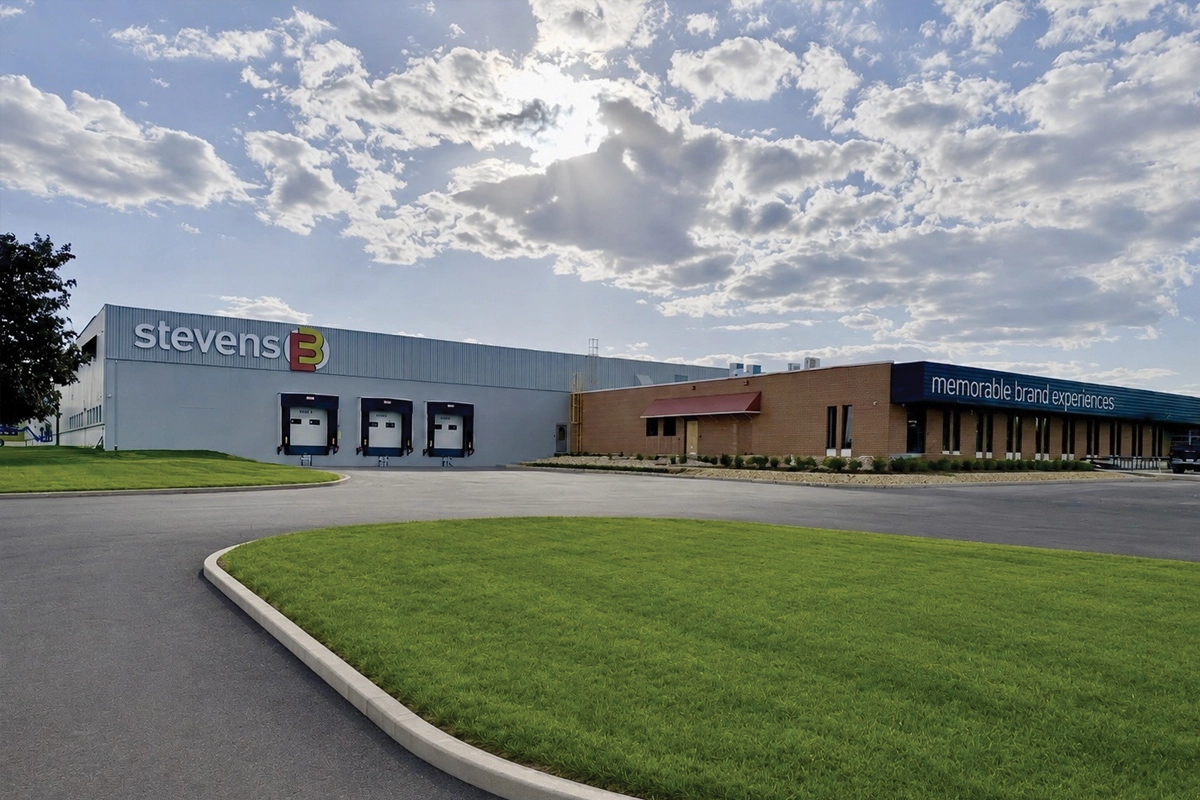
MOST OF ALL, TRUST IS BUILT BEFORE THE SHOW OPENS
Because when the aisles fill, the lights come up, the staff steps into position and the first visitor walks into the space, the months of planning become a live experience. At that moment, the exhibit must do what it was created to do.
THE SHOW ALWAYS OPENS
And for the brands that invest in being there, having the right partner behind the scenes can make all the difference.
This story originally appeared in the Q4 2025 issue of Exhibit City News, p. 98. For original layout, see Print Version
Related stories